Wednesday, 28 October 2026

Reading Beyond Sprint Points in MotoGP Title Swings

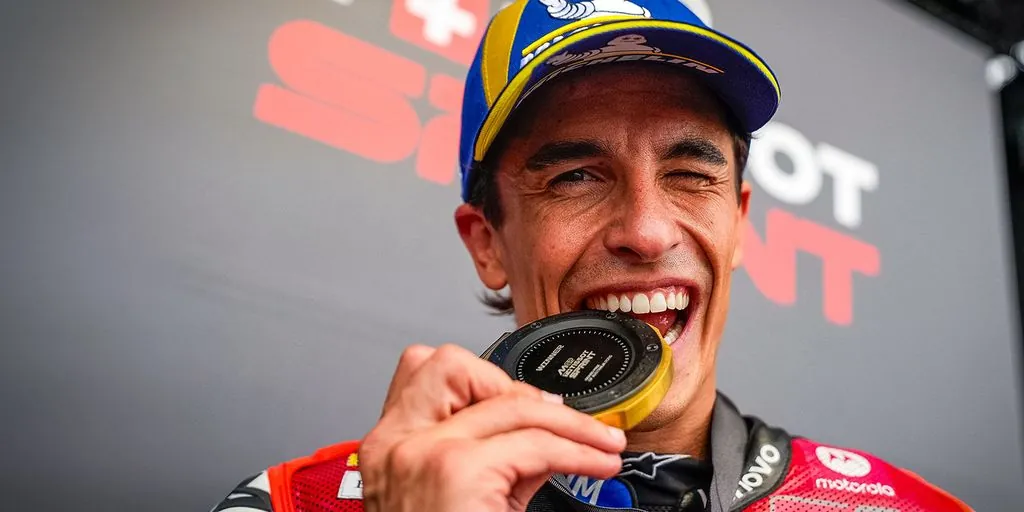
A motorcycle racer smiles and bites a sprint winner medal while celebrating.

Interpreting Sprint Outlier Data and Attrition

Evaluating championship tables requires separating raw point shifts from single-race mechanical and riding variables. In the report Marc Marquez Takes Title Lead as Martin Crashes Out in Phillip Island Sprint, the headline shift reflects high-stakes track incidents rather than pure pace differentials alone. Marc Marquez secured his ninth Saturday sprint win of the 2026 season for Ducati, while title rival Jorge Martin lost the standings lead after crashing his Aprilia at Turn 8 on Lap 8. The sequence began when Martin ran over the Turn 7 kerb while pursuing Marquez, unsettling the bike before losing front tyre grip. Because a crash and subsequent weekend-ending injury remove a contender from further scoring, point margins can change drastically in a single afternoon without demonstrating an inherent machine advantage across changing conditions.

Post-Race Penalties and Classification Caveats

Final classifications also mask on-track performance due to technical compliance measures rather than outright speed. Ai Ogura originally crossed the line sixth on the SuperFile Trackhouse machine but dropped out of the scoring positions after an eight-second post-sprint tyre pressure sanction. That adjustment reshuffled the finishing order by promoting Brad Binder to sixth and elevating Iker Lecuona into the final point-scoring position in ninth. With Alex Marquez and Fabio Di Giannantonio rounding out an all-Ducati podium amid late, intermittent rain drops, the recorded timing gaps and finishing tiers highlight how technical rule enforcement, rider retirements, and weather shifts influence recorded results.

Official reference: Marc Marquez takes title lead with Sprint win, Martin crashes out of epic battle.

Reading Friday Practice Times Without Misinterpreting Phillip Island Pace

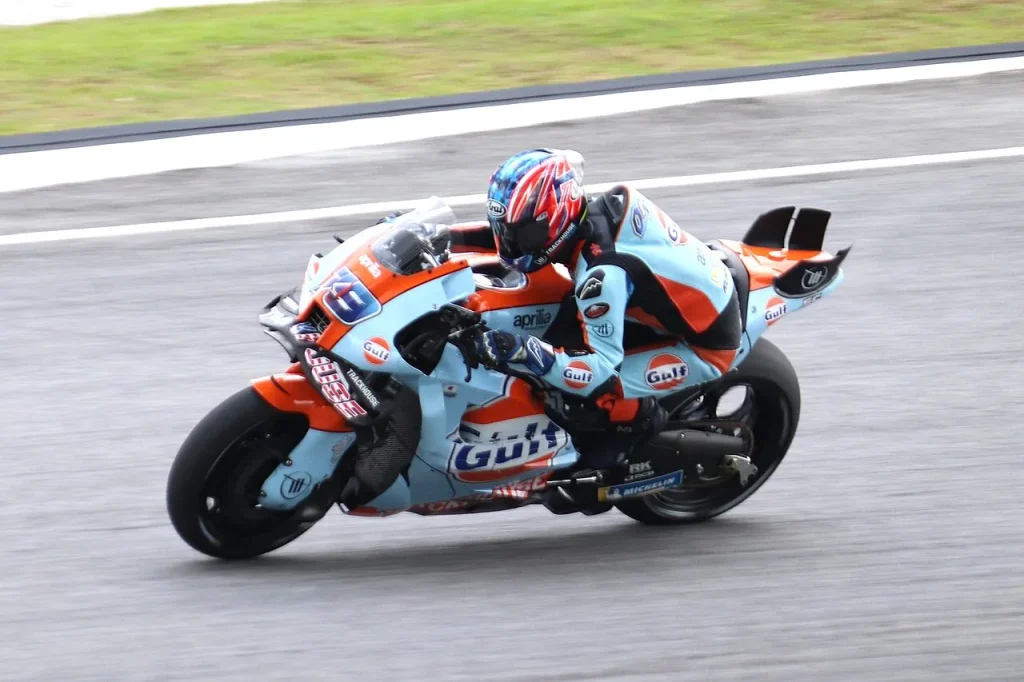
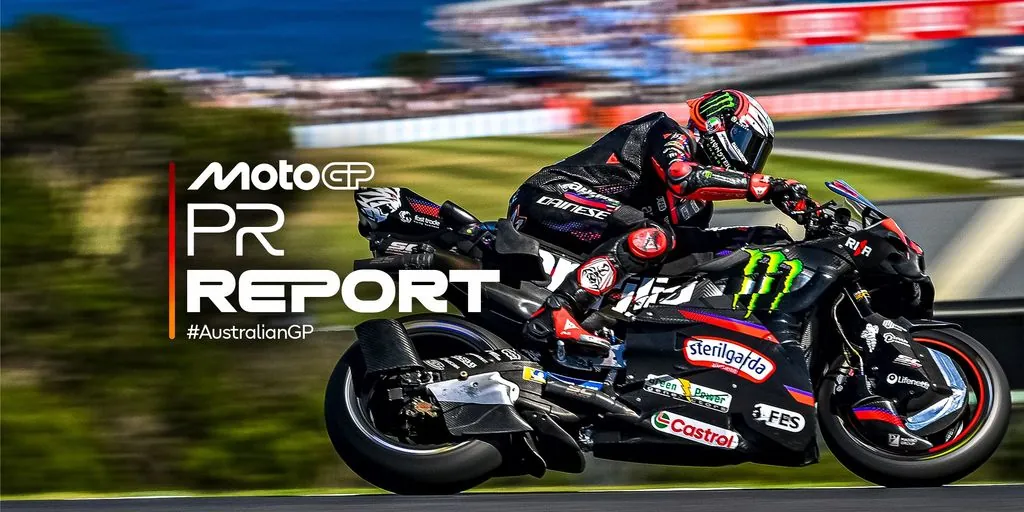
A motorcycle racer leans into a turn on an asphalt circuit.

What Practice Times Actually Measure

Single-lap practice times illustrate which machinery and riders managed an optimal flying lap during the session window, but they do not provide a complete picture of overall race capability. At Phillip Island in October 2026, Marco Bezzecchi Tops Friday MotoGP Practice at Phillip Island as Aprilias Surge, leading the afternoon timing screens with a lap of 1’26.775 after recovering from an earlier crash and red flag. While placing four Aprilia RS-GP machines among the top five demonstrated strong single-lap pace on that specific afternoon, practice lap charts reflect targeted time-attack runs to secure top-ten spots rather than identical long-run race simulations.

Understanding Margin and Session Interruptions

Data from interrupted sessions requires careful context. The Friday afternoon running saw two separate red flags within the opening twenty minutes—one triggered by a tumble and track debris from an incident involving Bezzecchi and Alex Marquez at Turn 4, and another caused by wildlife crossing the track. Additionally, late yellow flags from Alex Marquez at Turn 4 altered the final minutes of flying laps. These stoppages disrupt tire preparation and prevent riders from following uniform run plans.

Narrow Spreads and the Q1 Cutoff

A tightly clustered timing sheet highlights how easily session circumstances can influence classification. Behind Bezzecchi, Raul Fernandez, Marc Marquez, Ai Ogura, and Jorge Martin, the battle for the top ten remained razor-thin, with Enea Bastianini in seventh edging Pedro Acosta in eighth by just 0.026 seconds. Across the field, 14 riders were covered by under a second, and positions 11 through 19 were separated by less than six tenths. Because factors such as tow availability, red flags, and yellow-flag lap cancellations affect these narrow margins, a driver or rider ending up in Qualifying 1 is a reflection of session execution under varying circumstances rather than a direct, definitive ranking of machine or rider performance.

Official reference: Bezzecchi fastest on Friday at Phillip Island, Aprilias gang-up on Marc Marquez.

Understanding the Regulatory Window for MotoGP Double Long Lap Penalties

A Grand Prix motorcycle rider leans through a turn on a racetrack.

Timing the Five-Lap Execution Window

Race timing monitors often reveal an immediate shift in pace when stewards assign an infraction, but evaluating the tactical impact requires understanding how MotoGP double long lap penalties are served under the sporting regulations. Under FIM Article 1.19.2, the compliance count does not initiate at the precise instant of the incident or decision. Rather, the formal serving window begins once the competitor crosses the finish line for the first time after the notification transmits to their onboard dashboard.

From that initial crossing, the rider receives an allotment of five laps to complete both passes through the designated asphalt corridor. Because official timekeeping systems simultaneously transmit the sanction to pit crews and broadcast monitors, teams can track the remaining laps and alert their rider using pit board signals to prevent procedural missed deadlines.

Handling Caution Flags and Corridor Limits

Lap-by-lap timing traces during penalty sequences can show varying time losses depending on track status and route execution. A competitor cannot enter the loop if caution signals or yellow flags are active across the penalty sector. When an incident closes that portion of the track, the regulations add an extra lap to the rider's compliance window for each unusable lap, preventing an unfair timing crunch.

The physical execution also requires strict adherence to painted white boundary lines marked on the outer runoff of the chosen turn. Straying beyond these markers can prompt stewards to void the effort and order a repeat attempt, while overtaking remains forbidden throughout the lane. Riders must also safely merge back onto the racing surface without compromising other competitors.

Noncompliance Escalation Versus Late-Race Conversions

When reading race results and timing sheets, observers must distinguish between an unserved penalty escalation and a standard time conversion. If a rider exceeds the allotted five laps without completing both mandatory loops, the penalty escalates into a pit lane ride-through rather than an automatic post-race time penalty. Failing to enter pit lane within three laps of that subsequent instruction results in a black flag disqualification.

By contrast, an equivalent time addition is primarily reserved for scenarios where late-race timing leaves insufficient laps to notify or execute the sanction, or when a race is stopped before completion and not restarted. Interpreting the timing screen correctly requires tracking whether lost seconds stem from mandatory route detours, caution-period extensions, or procedural adjustments applied by race direction.

Official reference: https://www.fim-moto.com/fileadmin/2026_GP_Sporting_Regulations_-_Updates_13_Sept__26.pdf?t=1792877218.

How IMSA Pit Stop Timing Constrains Driver Changes

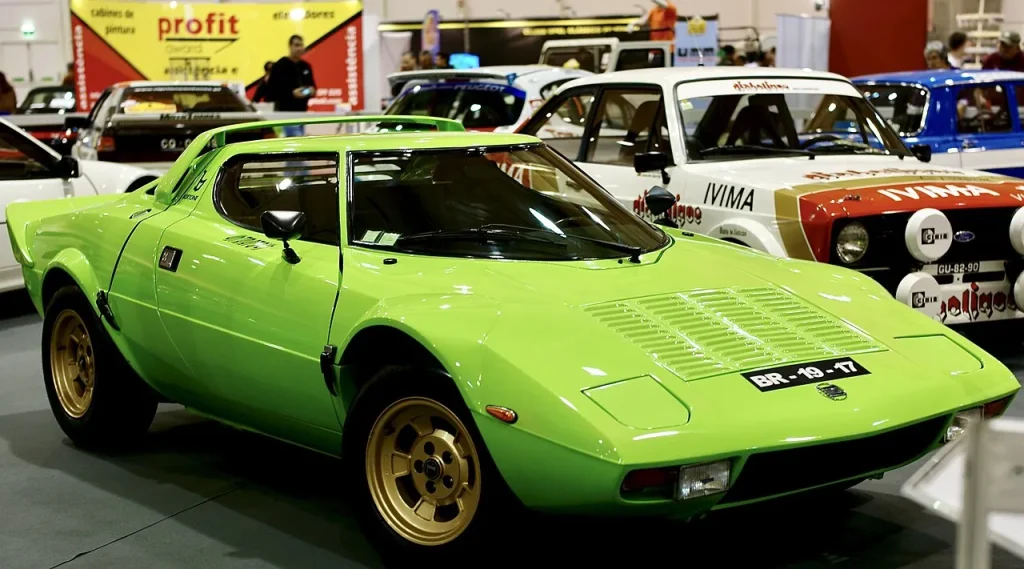
A Lancia Stratos HF sports car.

The 25-Second Service Target

In IMSA competition, routine pit servicing involving four tires and fuel commonly finishes in under 25 seconds. When evaluating pit performance, timing data reflects the entire duration a car spends stationary, which creates an operational window for the cockpit swap. Under IMSA endurance racing driver change rules, the swap must occur while adhering to strict crew allocations rather than unlimited trackside assistance.

While four crew members carry out mechanical tasks such as changing tires, refueling, or swapping brake pads, exactly one designated crew helper is allowed over the pit wall specifically to handle the driver change. Pit wall crossings are forbidden until the car stops completely in its stall. That single helper coordinates egress, places custom seat inserts when teammates require different physical positions, fastens safety belts, and links vital umbilicals including radio, helmet air hoses, and hydration lines.

Reading the Strategy Behind Driver Change Benchmarks

Completing a cockpit exchange within an estimated 25 to 30 seconds allows teams tactical flexibility, such as servicing only two tires without having the stationary interval extended by the driver swap. However, pit delta times should not be read as pure indicators of mechanical efficiency or athletic movement in isolation. A delay in the stall may stem from a stubborn harness latch, connection issues with radio or drink lines, or broader strategy calls rather than a basic physical mistake.

Lineup rules also shape these transitions across different rounds. Standard IMSA races mandate at least two drivers, whereas major endurance events at Daytona, Sebring, Watkins Glen, and Road Atlanta permit three or four. In every scenario, safety measures such as the strictly enforced 60 km/h pit-lane limit impose constant boundaries on pit road transit times, reminding observers that overall lane times reflect regulatory limits as much as crew execution speed.

Official reference: Art of the Driver Change: Poetry (or Comedy) in Motion | IMSA.

Tracking WRC Tyres: What Barcode and RFID Scans Actually Confirm

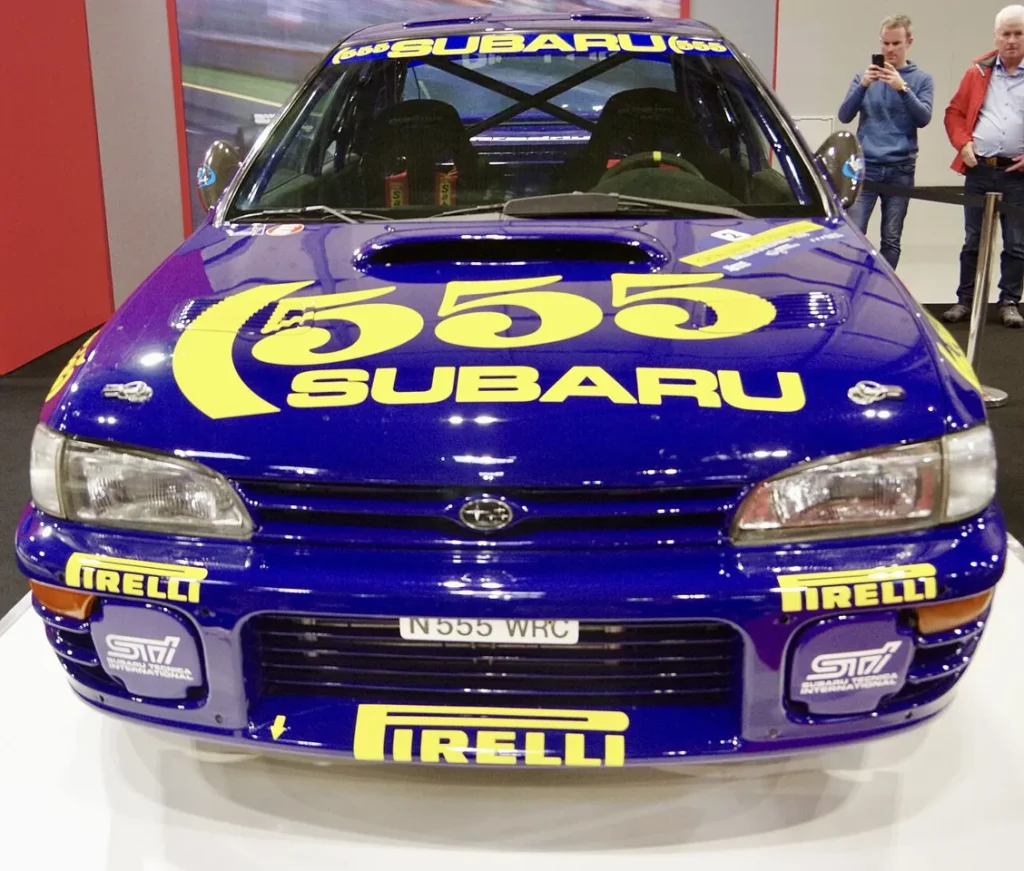
A rally car is on display indoors.

Tracking Tyres from Factory to Service Park

In the FIA World Rally Championship, officials regulate tyre usage by registering every competition tyre intended for four-wheel-drive entries before competition begins. Embedded Radio Frequency Identification tags are built directly into the tyre structure prior to moulding and vulcanisation, accompanied by unique external barcodes. For 2026, designated supplier Hankook compiles barcode lists under FIA oversight to allocate specific sets to individual P1 drivers and supply registered lists for Junior WRC competitors. When scrutineers review this WRC tyre marking explained at exit gates, the resulting scan data logs custody and verifies compliance against entry quotas, rather than detailing how a compound is performing.

Scrutineering Checkpoints and Stage Restrictions

Physical verification occurs at designated marking stations positioned when cars exit service parks, Remote Service Zones, or Tyre Fitting Zones. At these points, a single team member per car may assist officials with scanning RFID chips and barcodes, while shakedown uses a technical zone checkpoint where crew assistants are excluded. Complete wheels can only be mounted, dismounted, or swapped in authorised service and tyre zones, requiring any onboard spares to stay with the car across the loop. Non-registered pattern tyres from the official supplier are acceptable strictly on liaison road sections, but special stages require strictly logged rubber.

Interpreting Inspection Data and Caveats

While barcode records prevent teams from deploying unauthorised compounds or exceeding event limits, this logging should not be conflated with performance metrics. Scans confirm administrative eligibility and serial identification, but they do not capture live wear rates, running pressures, or surface interactions. Manufacturer technicians can examine tyres and gather operating condition data at stage finish points, yet any subsequent telemetry or inspection notes remain subject to variable stage surfaces and ambient conditions rather than demonstrating an absolute measure of tyre life or car balance.

Official reference: https://www.fia.com/system/files/documents/wrc_2026_sr_version_13_january_2026.pdf.

Tuesday, 27 October 2026

Interpreting Flag-to-Flag Lap Times and Pit Stop Data in MotoGP

Marc Márquez riding the #93 Repsol Honda MotoGP motorcycle, leaning into a corner on an asphalt circuit alongside red-and-white striped kerbing. The rider is wearing branded Repsol Honda leathers and a helmet, with visible Honda, Repsol, and Red Bull liveries.

The Time Cost of Flag-to-Flag Pit Stops

When analysing Grand Prix timing sheets during mixed-weather events, a sudden drop in a rider's position often comes down to pit-lane transit times rather than pure riding pace. Under MotoGP flag-to-flag regulations, premier-class competitors are permitted to change machines as often as they wish between their two allocated motorcycles once race direction signals the condition or declares a wet race. However, negotiating pit lane requires adhering to a strict 60 km/h speed limit between timing markers, drawing an automatic double Long Lap penalty if breached. This transit at reduced speed consumes tens of seconds, skewing sector times and making pit-stop laps dramatically slower than full-speed running.

Reading Lap Deltas and Timing Multiple Swaps

Timing screens alone do not reveal tyre grip, so analysts must cross-reference lap times against the track evolution. While modern rules leave tyre selections unrestricted during flag-to-flag conditions—allowing switches between slicks, wet rubber, or even identical set-ups—tactical missteps create severe timing deficits. For instance, at Misano in 2024, Jorge Martin pitted for rain tyres when light rain fell, only for the weather to clear almost immediately. That choice necessitated a second stop to return to slicks, dropping him down the order to a 15th-place finish while competitors who stayed out preserved their track position. Outside exceptional safety mandates such as the 2013 Australian Grand Prix, where tyre longevity limits required a compulsory switch by lap 10, MotoGP multiple bike changes represent a calculated trade-off where the lap-time penalty of the pit lane must be offset by substantially faster subsequent laps.

Official reference: How Do MotoGP™ Riders Switch Bikes During a Race?.

Why Grounded Medical Helicopters Delay Circuit Running

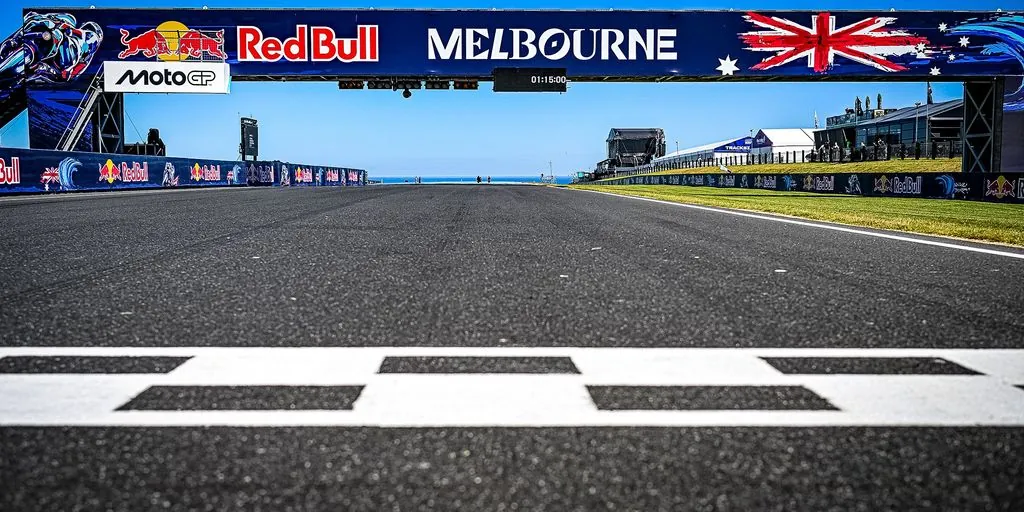
An empty race track straight extends from the start-finish line beneath an overhead gantry.

Safety Standards and Resumption Estimates

Track action at a Grand Prix can be halted even when tarmac conditions look acceptable, as demonstrated when the MotoGP Australian GP Delayed as Reduced Visibility Grounds Medical Helicopter issue arose at Phillip Island during Sunday running in October 2026. Organisers initially indicated track activity would wait for visibility improvements, targeting an estimated resumption window around 11:00 local time with a 10-minute warm-up session planned first. When looking at timetable updates during a stoppage, target restart times should be treated as operational estimates rather than guaranteed clearances, since flight safety depends on evolving local conditions.

Regulatory Air and Road Transfer Limits

The delay stems from strict logistical safety parameters set by Article 5.3.12 of the FIM Grand Prix World Championship Regulations. The framework normally mandates a fully equipped medical evacuation helicopter flown by an experienced pilot, positioned near the medical centre to avoid interim ambulance transfers, and capable of reaching a designated hospital within a standard guidance window of 20 minutes by air. While Article 5.3.12(c) allows ground ambulance alternatives if authorized after medical consultation, regulations advise that the hospital should normally be within 45 minutes by road. If transit times exceed reasonable distance and air support cannot fly, rules recommend considering stopping the event. Where race communications do not specify whether road transfers were considered or approved, fans cannot infer whether ground logistics were unviable or simply undecided.

Official reference: LATEST: MotoGP Phillip Island track activity delayed.