Sunday, 1 November 2026

Interpreting Points and Discard Rules in the 2026 ERC Runner-Up Battle

Editorial illustration of an abstract motorsport news graphic for ERC: Titles and pride at stake on season showdown

Point Margins Versus Net Standings

Evaluating a championship battle late in the season requires looking beyond simple point totals. Ahead of the 23 to 25 October Rally 6 Cities North of Portugal, Andrea Mabellini held an eight-point margin over Miko Marczyk for second place overall behind confirmed champion Teemu Suninen. In the coverage of the ERC Portugal finale: Mabellini held a structural advantage because he entered with no requirement to discard a previous score, whereas Marczyk faced the drop of his lowest tally, which stood at seven points.

A raw points difference does not define an exact finishing target on its own. While the discard dynamic clearly favoured Mabellini entering the 17-stage, 181.10-kilometre gravel event, championship rules create fluid target scenarios depending on where each competitor places and whether bonus points or attrition alter the baseline calculations.

Contextual Variables on Gravel

Data models in stage rallying must also incorporate competitive depth and mechanical attrition rather than treating finishing positions as predictable metrics. The Portugal finale featured an announced entry of 31 Rally2 crews, including experienced competitors like Nikolay Gryazin, Roope Korhonen, Kris Meeke, Léo Rossel, Mārtiņš Sesks, and Jan Solans. In a field of that scale, finishing in the upper tiers of the overall classification demands factoring in potential stage incidents or tyre wear.

Historical form provides useful context but remains subject to changing variables. Mabellini had previously retired on gravel at the Royal Rally of Scandinavia in May, and late-October weather introduces added uncertainty. Past finishes and points gaps outline probability rather than guaranteed performance on gravel stages.

Official reference: FIA’s event preview.

Reading the Heat: What Visible Brake Glow Really Tells Us

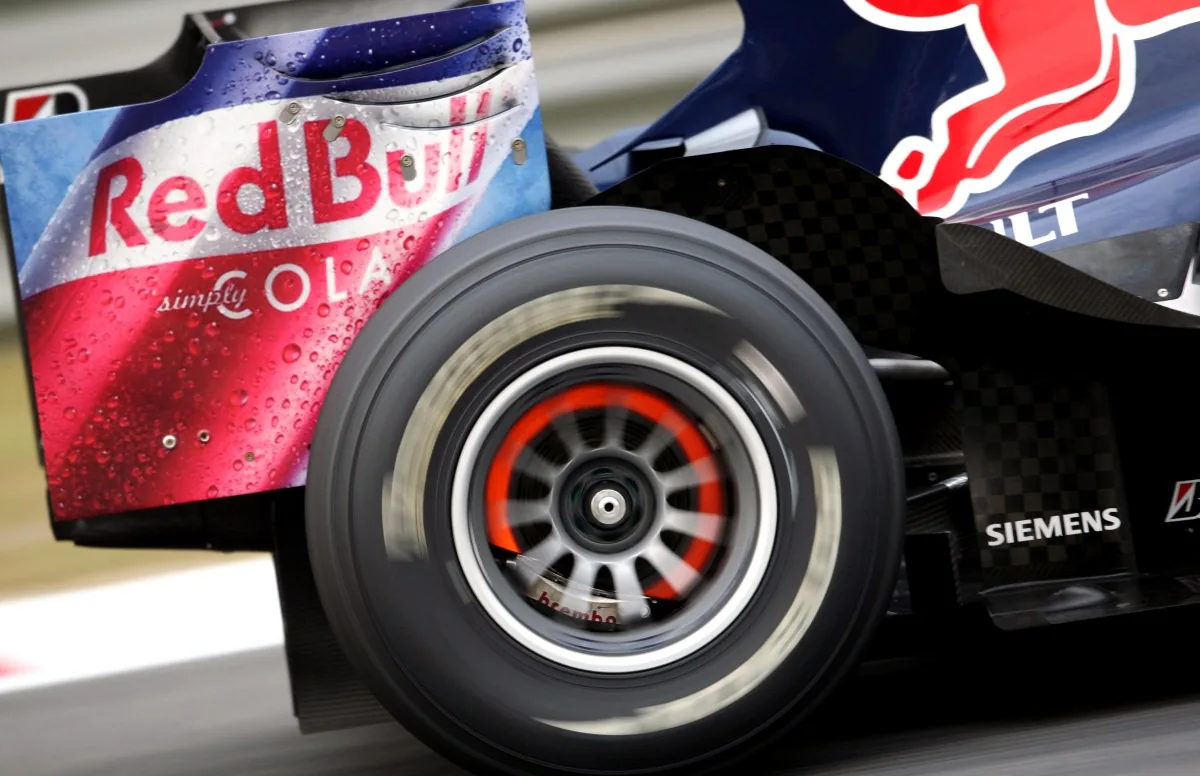
Close-up of a Red Bull-liveried Formula 1 car’s wheel, showing a red-orange glowing brake disc behind the blurred spokes.

A Visible Sign of Friction

Trackside cameras frequently capture Formula 1 cars shedding speed before a corner with brake assemblies radiating bright crimson light. The physical cause behind Why F1 brake discs glow red is thermal radiation: severe friction between the pads and discs elevates the carbon-carbon material to temperatures high enough to emit visible light. While ambient lighting conditions—such as twilight, darkness, or shadows—can exaggerate how bright the glow appears, the phenomenon stems directly from the mechanical conversion of kinetic energy into thermal energy.

Understanding the Numbers and Their Limits

Assessing brake performance from visual cues alone requires caution regarding what the data actually confirms. Technical accounts from endurance racing indicate that carbon discs begin showing a faint red glow around 600°C, intensifying noticeably above 1,000°C. Separately, a 2014 Auto123 report documented that extreme braking events in Formula 1 could push disc temperatures past 1,200°C. These reported benchmarks reflect specific test conditions and different racing categories rather than universal operating thresholds. Spotting red discs does not allow an observer to calculate a precise peak temperature or compare the exact thermal loads between different machines.

Thermal Windows and Operating Limits

Seeing a glowing disc does not indicate a system failure or an imminent breakdown. Carbon-carbon friction components perform poorly when cold and require substantial heat to function effectively within their optimal performance window. The material provides resistance to thermal expansion, thermal cycling, and sharp temperature gradients, while drilled ventilation holes assist in shedding heat between deceleration zones. Concern arises only when disc temperatures exceed the designated operating limits without adequate cooling, which risks accelerated wear and reduced efficiency. Consequently, a glowing rotor is an expected byproduct of heavy braking within designed parameters, not proof of an overheating crisis.

Official reference: Formula 1 official news and results.

Saturday, 31 October 2026

How to Evaluate Controversial Driver Rankings Without Confusing Subjective Debate for Measurable Evidence

Three dark helmet symbols numbered 1, 2 and 3 beside the text “Top 10 Most Controversial F1 Drivers of All Time (2025 Edition)” on a cream background.

Recognising Distinct Categories of Controversy

Rankings that evaluate contentious figures in motorsport often blend fundamentally different types of incidents into a single sequence. Examining compilations such as the Top 10 Most Controversial F1 Drivers of All Time (2025 Edition) shows how easily formal regulatory breaches, such as Michael Schumacher's disqualification from the 1997 World Championship or Lewis Hamilton's 2009 sporting disqualification for misleading stewards, sit directly alongside disputes over safety prudence like Niki Lauda stepping out of the wet 1976 Japanese Grand Prix. Because the baseline criteria span administrative errors, regulatory penalties, personal statements, and differing attitudes toward danger, any resulting hierarchy represents an interpretive list rather than a standardized statistical measurement of driver conduct.

Separating Institutional Findings From Team and Third-Party Events

A careful reading of historical controversies requires distinguishing between documented personal culpability and external actions that happened around a competitor. In the 2008 Singapore Grand Prix, reporting confirms that Renault team management directed Nelson Piquet Jr. to crash intentionally, triggering a neutralising safety car that assisted Fernando Alonso's victory, yet benefiting from the sequence does not verify advance knowledge or participation in the plan. Similarly, Max Verstappen's presence in high-profile debates involves both personal aggressive trackcraft and race control rulings, such as the 2021 Abu Dhabi safety car procedure, which the governing body subsequently attributed to official human error while leaving the championship outcome intact.

Handling Allegations and Contextual Context

Subjective driver lists frequently reference paddock friction or alleged political favouritism, such as the claims surrounding Alain Prost's career or Nigel Mansell's intense rivalry with Nelson Piquet at Williams. These anecdotes highlight how interpersonal friction and team politics shape popular reputations, but they do not constitute validated adjudications of unfair advantage. When reviewing summaries of motorsport disputes, readers should identify the specific underlying event, separate confirmed sanctions from surrounding speculation, and evaluate each historical dispute within its original sporting framework.

Official reference: Formula 1 official news and results.

Interpreting Formula 1 Media Schedules Without Overstating the Data

Editorial illustration of a stylised microphone and speech bubbles for United States GP: Newey, McNish and Budkowski named for Friday press conference

How Official Timetables Distinguish Fixed Schedules from Performance Outcomes

Official Formula 1 media documents provide structured operational data across a race weekend, but interpreting them requires distinguishing between pre-allocated slots and result-dependent appearances. For the 2026 United States GP: Newey, Allan McNish, and Marcin Budkowski were scheduled for the Friday team representatives session between initial practice sessions, illustrating how technical and managerial personnel are designated well before track running begins.

In contrast, post-session debriefs cannot be planned with named individuals because the governing bodies mandate attendance based strictly on on-track results, such as designating places for the three fastest qualifiers on Saturday and the top three finishers on Sunday. Analyzing schedule data also highlights operational ambiguities that observers should acknowledge rather than assume away; for instance, published rosters may list participant names alongside multiple session times without detailing individual group splits or time zones, and all such timetables remain formally subject to change.

Official reference: FIA's announcement, dated 21 October.

Reading MotoGP Lap Counts: How Timing Loops Decide Red Flag Restarts and Results

Editorial illustration showing a red flag on a dark pole within a rounded beige panel, with a MotoGP restart rules title to the right.

Tracking Completed Laps Rather Than On-Screen Running Order

When a red flag halts a Grand Prix, live television graphics show the current lap in progress and the active running order. However, interpreting the official outcome requires looking at timing loops rather than the broadcast lap counter. The official standing does not simply snapshot who was leading when the red signal flashed. Instead, officials roll back timing data to determine the leader's calculated completed laps without the red signal displayed, assembling the field using the last valid crossings on either the leader's lap or the prior lap.

Under the 2026 regulations, understanding these timing thresholds clarifies how the MotoGP red flag restart rules dictate the remainder of the event. A contest is only considered final if the leader's calculated completed laps reach the three-quarter mark of the original race distance, rounded down to whole laps. If that threshold is not reached, the distance completed governs whether the opening segment counts toward championship points or is discarded entirely.

Interpreting Distance Thresholds for Points and Grids

Data from the stopped segment establishes who is eligible to take part in any resumption and how points are distributed if track action cannot resume. If the leader completes fewer than three laps before a stoppage, the entire segment is voided; should weather or track conditions prevent a restart, the event is cancelled with zero championship points awarded. If at least three leader laps are logged but the race cannot resume, the interrupted classification stands as the official result. In that scenario, completing less than the rounded-down fifty percent distance threshold awards half points, while reaching or exceeding that halfway mark grants full points.

When a restart does occur after at least three completed leader laps, the grid is built directly from the interrupted-race classification rather than qualifying times. Riders must have met specific criteria to be classified: they must have been actively competing when the red signal appeared—as determined exclusively by the stewards—and must bring their machine across the pit-entry timing loop within five minutes of the signal unless granted an exceptional exemption. Only classified finishers may line up again, with those classified a full lap down relegated to starting from the pit lane.

Official reference: official red flag guide.

How MotoGP Yellow Flag Rules Determine Where Passing Bans End and Penalties Apply

Illustrated yellow flag on a dark pole in a rounded beige panel, with a heading to the right.

Where the overtaking restriction starts and stops

Timing sector data and track position graphics often show sudden position changes during yellow flags, but interpreting these changes requires understanding the precise boundary where racing resumes. According to the 2026 FIM Grand Prix World Championship Regulations updated on 13 September 2026, passing is forbidden throughout the entire yellow-controlled zone until reaching the point where a green flag or green light panel is shown. Merely riding past the crash or stalled machine does not permit racing to resume, meaning any position changes logged between the incident and the green signal remain illegal.

Self-correction and penalty mechanics

Understanding the governing MotoGP yellow flag overtaking rules helps explain why certain passes trigger race-direction intervention while others do not. If a rider makes an overtake under yellow but immediately recognizes the infraction, deliberately allowing every passed rider back through avoids any penalty. When an illegal pass is not conceded, stewards issue a penalty communicated via dashboard signals and monitors, with compliance lap counts starting the first time the rider crosses the finish line after the dashboard alert is sent.

Signal distinctions and lap data implications

Trackside signals differ in location rather than the behavioral mandate imposed on competitors. A single yellow indicates a hazard off the racing surface beside the circuit, while double yellows indicate an obstruction wholly or partly blocking the track; both mandate slowing down, proceeding with caution, and holding position. In practice and warm-up sessions, telemetry analysts and fans must note that any passage past a yellow signal automatically cancels that lap time regardless of whether any overtaking occurred, whereas race penalties do not specify a single fixed type or duration in the rule.

Official reference: danger ahead beside the track.

How MotoGP Blue Flag Rules Direct Track Traffic Beyond Simple Lapping

Editorial illustration with a blue flag in a rounded beige panel on the left and a heading on the right.

Different Track Contexts Shape Rider Obligations

In motorcycle racing, interpreting track signals requires looking at the specific session and location where marshals display them. Under 2026 sporting regulations, MotoGP blue flag rules alter a rider's duties depending on whether the signal appears during a Grand Prix, in practice, or at pit exit. While the flag universally communicates that faster traffic is closing in from behind, it does not apply one uniform command across every scenario.

During a race, a rider about to be lapped must yield to all lapping competitors at the earliest opportunity, and overtakes between lapped machines are barred under the flag. However, the rulebook leaves tactical nuance: it does not prescribe a rigid manoeuvre or specify a fixed corner threshold by which the yield must occur. MotoGP guidelines note that ignoring signals can lead to stewards applying penalties, but there is no predetermined automatic sanction set out for a delayed yield.

Practice Scenarios, Pit Lane Exits, and Final Lap Timing

Practice sessions bring a different standard aimed at maintaining session flow and safety. A rider shown the blue flag in practice must yield to the faster machine behind and avoid disturbing competitors by cruising slowly across the racing line.

At pit exit, a signalling post displays the blue flag to warn a departing rider of approaching traffic already at speed on the circuit. The rider entering the track bears the responsibility of merging safely without disturbing approaching bikes.

The signal also performs a timing function at race finishes. If backmarkers circulate closely ahead of the leader crossing the line on the final lap, officials display the blue flag alongside the chequered flag simultaneously to that group. When this occurs, only the leader has completed the grand prix distance; the riders immediately ahead must continue around the circuit to complete their own final lap.

Official reference: MotoGP’s official flag guide.

How Flag-to-Flag Rules Shape MotoGP Pit Stop Strategy

Editorial illustration with one plain white flag on a dark pole at left and the title “MotoGP white flag bike change rules” at right.

Understanding the Flag Signals and Timing

In MotoGP timing monitors and live race data, sudden drop-offs in lap times often signal incoming weather rather than mechanical failure or rider fatigue. When evaluating these pace changes, fans must differentiate between track warnings and regulatory triggers. A white flag bearing a diagonal red cross warns competitors that rain is actively falling on that sector of the asphalt, yet it does not permit a motorcycle swap. Machine changes are only authorised when Race Direction deploys the plain white flag or declares a wet race prior to the start.

Under official MotoGP white flag bike change rules, the appearance of the plain white signal grants permission to pit rather than mandating an immediate stop. Timing sector deltas illustrate how this optional swap creates major strategic divergence across the field. Competitors can elect to stay on track on their existing tyres or enter pit lane immediately, and riders are permitted to switch machines repeatedly throughout the event even if precipitation ceases.

Pit Lane Protocols and Machine Adjustments

Once a rider commits to entering pit lane across the designated entry timing line, the swap must adhere to strict sporting restrictions. Up to five crew members wearing technical-approved helmets can assist, with one individual specifically dedicated to monitoring pit-lane traffic to prevent an unsafe release. The rider exiting their machine-change stall must yield right-of-way to any machine travelling down the lane.

Crucially, data showing a bike swap does not necessarily reflect an automatic switch between dry slicks and wet treaded tyres. Regulations allow slick-to-slick or rain-to-rain exchanges alongside standard compound switches, with teams permitted to apply tyre warmers or adjust bike setup in pit lane. Consequently, observers analysing timing sheets should recognise that pit visit durations and subsequent lap times reflect distinct tyre compound decisions and machine setups rather than identical track conditions or machine handling across the grid.

Official reference: MotoGP’s bike-switching guide of 31 January 2025.

How MotoGP Officials Manage the Mechanical Black Flag and Track Re-entry

Editorial illustration of a black flag with an orange disc beside the MotoGP rejoining topic label.

Safety Signals Versus Automatic Retirement

Timing screens and sector tracking often show a competitor suddenly losing pace or pulling off before race control posts a formal status update. When marshals present a black flag bearing an orange disc alongside a motorcycle number, that visual signal marks a specific machine carrying a mechanical fault deemed hazardous to the competitor or the rest of the field. Under FIM regulations updated in September 2026, receiving this notice does not constitute an instant disqualification or outright retirement. Instead, the rider must pull off the circuit straight away rather than circulating back to the garage on a damaged machine.

Official Authorization Required to Return

In motorsport technical operations, a completed repair job in pit lane does not automatically clear a bike for competition. The formal MotoGP black flag orange disc rejoin rules dictate that leaving the racing surface is compulsory, and re-entering the event strictly requires explicit authorization from an official. Even if mechanics finish work and log standard telemetry, self-rejoining without official clearance remains prohibited.

Distinguishing Safety Interventions from Disciplinary Calls

Interpreting flags correctly requires differentiating between safety interventions and conduct penalties. A standard solid black flag issued for a disciplinary infraction directs a competitor to enter the pit lane at the end of their current lap, barring them from restarting. By contrast, the orange disc addresses mechanical hazards immediately. Plain black signals also handle administrative or non-hazardous situations, such as managing bikes arriving after the safety car during a warm-up lap or requiring adjustments for non-dangerous transponder issues, demonstrating that flag data requires procedural context rather than single-metric assumptions.

Official reference: official MotoGP guide to flag meanings.

How Yellow Flags Change the MotoGP Long Lap Completion Window

Editorial illustration with one yellow flag on the left and the text “MotoGP long lap penalty under yellow flags” on the right.

Tracking the Compliance Window Under Caution

When race stewards hand down a penalty in Grand Prix motorcycle racing, timing sheets and dashboard displays start a strict lap count. Normally, a rider has three laps following notification to take a single detour, or five laps to complete both loops of a double penalty. However, navigating a MotoGP long lap penalty under yellow flags that cover the designated runoff lane is strictly prohibited. If marshals display yellow signals across that specific penalty zone, the loop becomes unusable, and officials add extra compliance laps to the rider's window so they are not forced into a regulatory trap.

Interpreting Extension Data and Restart Scenarios

When analysing race lap charts, it is important not to confuse a delayed penalty execution with driver hesitation or team error. The sporting regulations updated in September 2026 provide for conditional extensions, though the rule text does not state an exact mathematical formula for how many additional laps stewards grant when yellow signals clear. Furthermore, yellow signals positioned elsewhere on the circuit do not suspend the countdown; only cautionary flags covering the designated asphalt lane mandate a pause. If an unserved penalty carries into a race stoppage, its enforcement in the restart depends strictly on whether the race leader completed at least three laps before the red flag.

Official reference: MotoGP’s official flag guide.

Friday, 30 October 2026

Reading Stint Data: Why Tyre History Stays Attached to the Rubber

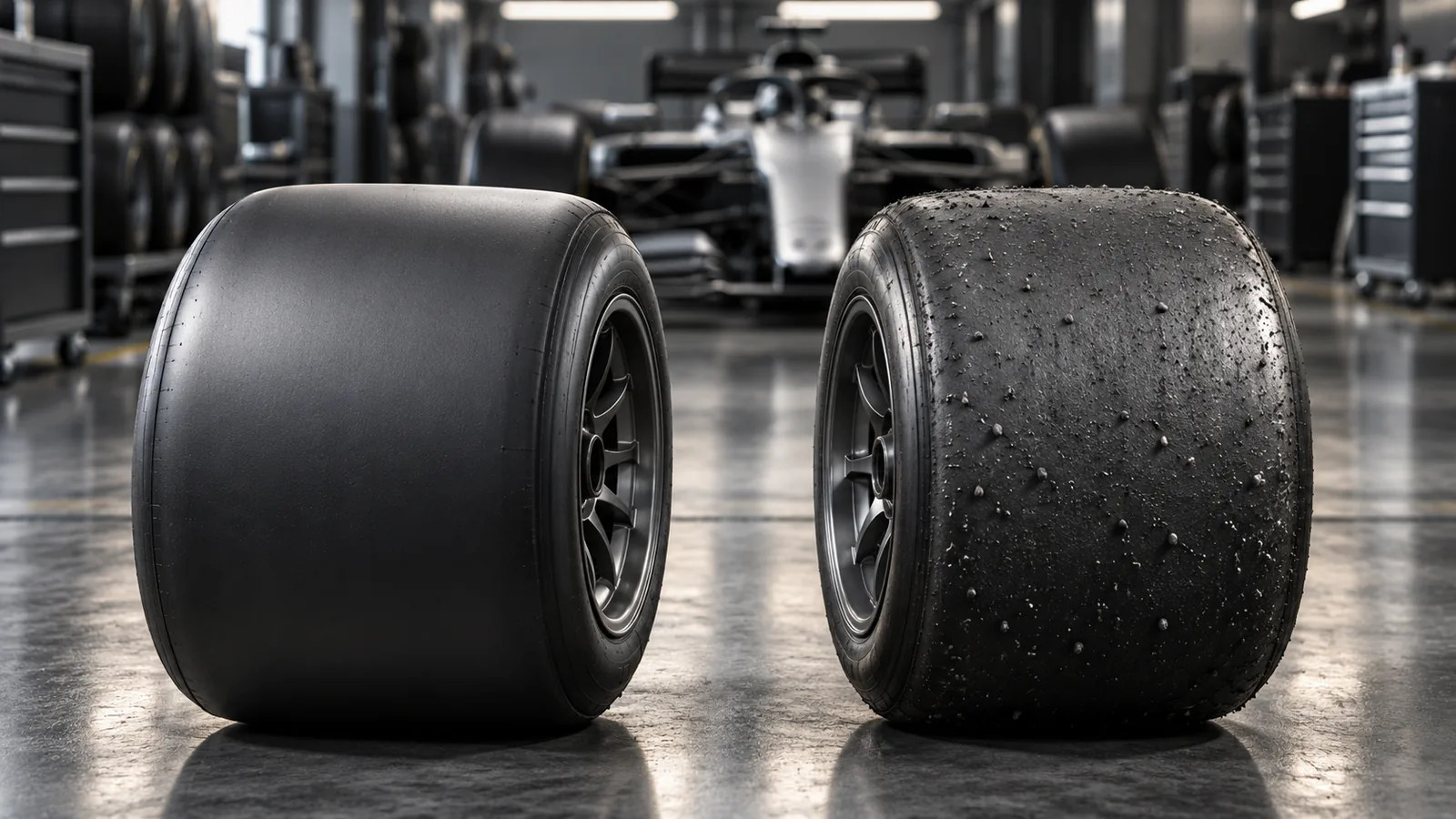
Illustration of a fresh racing slick beside a used slick with rubber pickup in a pit garage

Tracking physical sets versus pit visits

Broadcast timing monitors often present tyre age as a standalone counter, but that number tracks the lifecycle of an individual physical set rather than the start of a driver's newest stint. When understanding why F1 tyre age does not reset after a pit stop, analysts look to the set's prior running across practice, qualifying, or earlier race segments. If an engineer bolts on a scrubbed set that completed three laps in practice, those laps remain attached to the rubber's recorded history even as the car begins lap zero of a fresh stint.

Conflating stint length with total tyre mileage leads to skewed timing evaluations. Stint duration measures the continuous run since leaving the pit box, whereas tyre age captures cumulative track exposure, subject to the counting conventions of specific timing providers.

Distinguishing compound specification from set status

A compound designation such as soft, medium, or hard identifies a general rubber specification, not a unique piece of equipment. An outfit might possess multiple sets of the identical compound across a weekend, each with distinct running histories and heat cycles. Swapping one soft set for another replaces the physical tyre set without altering the compound specification, which remains a distinct regulatory classification under sporting rules.

What mileage metrics can and cannot prove

Laps completed provide a baseline of track exposure, but raw numbers do not dictate an exact grip deficit on any given tour. Grip responds dynamically to track evolution, fuel burn-off, operating temperatures, and surface phenomena like graining, which reflects specific operating conditions rather than immediate, irreversible destruction. An older set brought into its optimal working window may temporarily outperform a newly fitted set that is still warming up, reminding data observers never to treat age as an automatic, fixed pace penalty.

Official reference: 2026 FIA Sporting Regulations, Section B, Issue 09.

Decoupling Speed from the Time Card: How Special Stage Finish Controls Work

rally flying finish vs stop control

Two Checkpoints with Separate Operational Functions

In stage rallying, competitive timing ends at a different geographic point than where administrative verification occurs. Cars enter special stages at staggered intervals and contest the course against the clock. Requiring drivers to stop the instant their competitive run ends would create an immediate collision risk for following vehicles and severe safety hazards on high-speed, loose-surface roads.

To manage this risk, organizers split the stage conclusion across two distinct milestones: the flying finish line and the stop control. Looking at the operational mechanics of the rally flying finish vs stop control helps fans understand how timing data is captured and confirmed. The flying finish registers elapsed time at flat-out racing speed using timing beams or transponder loops, whereas the stop control is a stationary marshaling point placed several hundred yards downstream to log and verify official paperwork.

Visual Markers Governing the Finish Zone

A standardized system of colour-coded boards indicates when the competitive test ends and where deceleration must begin. Teams first pass a yellow advance warning board displaying a checkered flag roughly 100 metres before the stage ends. The competitive line itself is marked by a red checkered flag, which crews cross at full speed.

Once past the red checkered flag, drivers enter a mandatory deceleration zone. Located between 200 and 500 yards beyond the flying finish line is the red stop board. Cars must halt completely at this board so marshals can handle the administrative timekeeping duties.

Administrative Verification and Zone Restrictions

At the stop control, the co-driver presents the team time card to trackside marshals, who record or stamp the finish time onto the card and log it on official master sheets. Sporting guidelines instruct co-drivers to check these figures immediately before departing, requesting corrections on the spot or asking the marshal to note any timing discrepancy on the control log.

Strict sporting rules govern the entire stretch between the flying finish and the end-of-control board located roughly 50 metres past the stop checkpoint. Competitors may not stop prematurely, reverse, block the transit lane, or carry out repairs or maintenance within this zone. Only after driving past the final marker may crews stop freely and rejoin public liaison routes.

Official reference: FIA World Rally Championship regulations.

Interpreting Title Swings and Sprint Setbacks: What Phillip Island Actually Shows

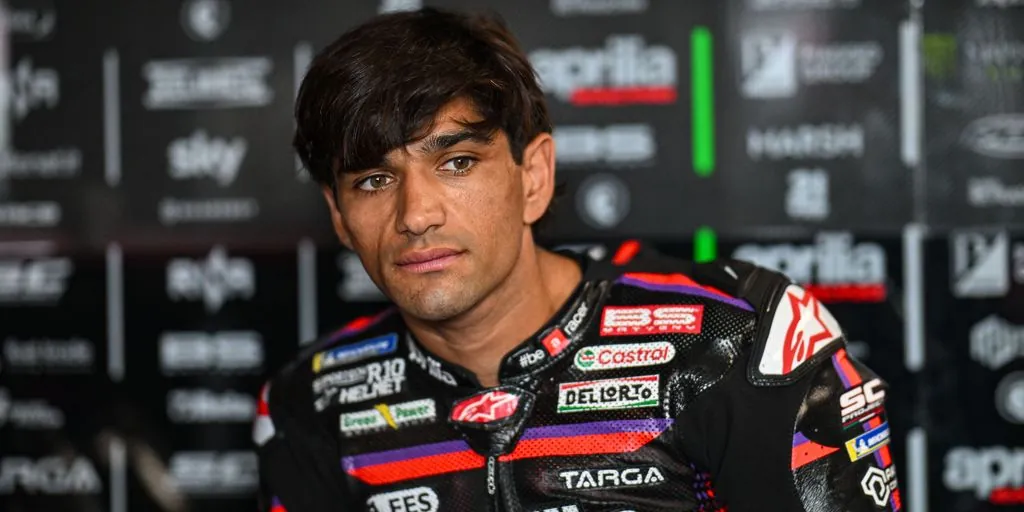
A motorcycle racer wearing racing leathers looks ahead inside a pit garage.

Quantifying Immediate Points Losses Without Projecting Beyond the Data

Championship standings reflect confirmed numerical results rather than future certainty. During the 2026 Australian Grand Prix weekend at Phillip Island, Aprilia Racing rider Jorge Martin entered with the championship lead, but an eighth-lap fall while battling Marc Marquez in the Saturday Sprint resulted in zero points. Marquez took his ninth Sprint victory of the season, creating an immediate numerical points swing that returned him to the championship lead.

While a weekend without points clearly impacts a rider's standing, point totals alone cannot forecast the final outcome of a season. The headline event where Jorge Martin Ruled Out of Australian GP After Phillip Island Sprint Crash demonstrates how sudden zero-score sessions alter the current table without resolving the championship fight itself.

Reading Initial Track Medical Reports and Inherent Diagnostic Limits

Initial medical bulletins released directly from circuit medical centres provide specific diagnostic indicators rather than complete recovery timetables. Following his Turn 8 crash, track medical evaluations confirmed a fracture of Martin's distal radius alongside a suspected distal ulna fracture, leading circuit doctors to declare him unfit for Sunday's Grand Prix.

Data consumers should distinguish between verified findings and provisional notes. Circuit officials confirmed the radius break while designating the ulna fracture as suspected, pending further definitive examinations in Melbourne. Treating preliminary track assessments as comprehensive prognoses overstates what early diagnostics prove before follow-up scans establish a full recovery path.

Official reference: Jorge Martin ruled out of Australian GP after Sprint crash.

How Track Limit Decisions and Off-Track Incidents Are Officiated in MotoGP

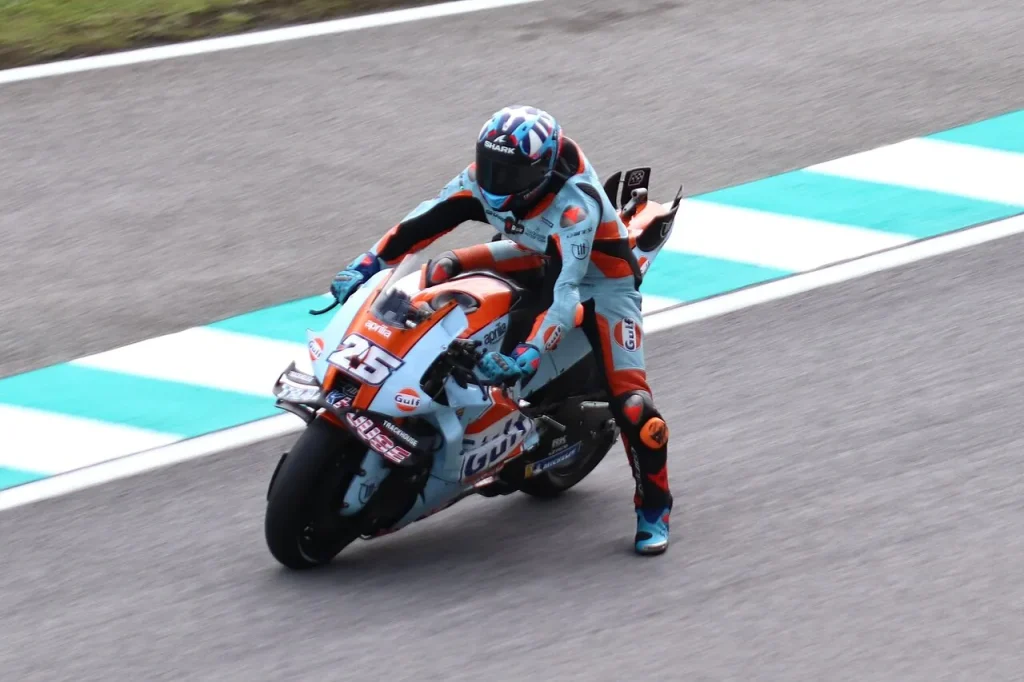
A motorcycle racer rides along a paved circuit next to the track kerbing.

Understanding Session Lap Invalidation

In official practice sessions and warm-ups, timing records are adjusted immediately whenever an off-track excursion occurs. Under FIM Grand Prix World Championship regulations, a violation leads to the cancellation of the specific lap time when Race Direction protocols determine that an advantage was gained. Official timing systems register these cancellations by monitoring both the machine and the competitor, including situations where a rider becomes separated from the bike during an incident outside track boundaries.

Race Enforcement and In-Race Communication

Official MotoGP track limits rules require riders to use only the designated track surface and pit lane across all sessions. If a rider leaves the circuit during a race, they are required to rejoin either at a designated location or without securing a competitive advantage. When an advantage is deemed gained or a substantial portion of the layout is missed upon rejoining, the FIM MotoGP Stewards Panel issues in-race penalties.

When a sanction is imposed, notification is delivered to the rider through onboard dashboard signals, pit boards, and shared timing monitors. From an analytical perspective, tracking when a penalty must be served relies strictly on official timing markers: the formal lap window to complete the sanction starts on the first crossing of the finish line after the dashboard dispatch has been logged.

Compliance Deadlines and Decision Finality

Competitors must serve penalties within the specified distance or lap allotment, and failing to comply leads to escalated disciplinary action. Although stewards possess the authority to substitute an assigned sanction with an ordinary time penalty when circumstances demand it, that replacement functions separately from the penalties applied for failing to respect an instruction window.

When evaluating disputed timing sheets or penalty classifications, observers must account for the legal framework governing officiating rulings. Track limit determinations by Race Direction and the FIM MotoGP Stewards Panel are classified as statements of fact decided by judges of fact. Under FIM disciplinary rules, these factual rulings cannot be protested or appealed to higher bodies such as the FIM Appeal Stewards, arbitration tribunals, or civil courts.

Official reference: https://www.fim-moto.com/fileadmin/2026_GP_Sporting_Regulations_-_Updates_13_Sept__26.pdf?t=1792953378.

Evaluating Qualifying Potential Versus Race Durability in MotoGP

A close-up portrait of a motorcycle racer wearing racing leathers.

Interpreting Grid Position Against Physical Limitations

A strong qualifying effort shows single-lap speed, but timing sheets do not measure physical strain over race distances. At the 2026 Australian Grand Prix, Raul Fernandez secured a second-row grid spot for Trackhouse MotoGP Team before injury forced him out during Saturday's running. When examining weekend data, a high grid placement indicates competitive machine setup and transient pace, yet it cannot confirm whether a rider can sustain braking forces and machine control over an entire 27-lap Grand Prix distance.

The decision that Raul Fernandez Withdraws from Australian MotoGP After Sprint Retirement highlights why session results must be interpreted alongside medical realities. Fernandez carried a stable fracture to his right index finger from Mandalika two weeks prior, complicated by soft-tissue inflammation. While the injury allowed short bursts of speed in practice and qualifying, the cumulative pain during the Sprint caused an early exit, demonstrating that baseline lap times cannot account for progressive physical fatigue or localized joint stress.

Reading Future Event Declarations and Session Gaps

Medical status updates provide important context when evaluating performance trajectories across back-to-back rounds. Fernandez was declared unfit ahead of the upcoming Malaysian Grand Prix at Sepang, requiring additional medical evaluation to determine whether recovery allows participation. For data analysts and fans, an unfit status indicates a clinical threshold rather than a failure of technical setup.

Session dropouts alter field dynamics without reflecting mechanical changes. The Phillip Island Sprint saw multiple front-runners exit, including Jorge Martin crashing from second place on Lap 8 at Turn 8. Because attrition changes championship points and finishing distributions, analysts must separate raw machinery performance from circumstantial endurance and injury factors.

Official reference: Fernandez withdraws from Australian GP.

Quantifying the Cost of Anticipating the Start in MotoGP

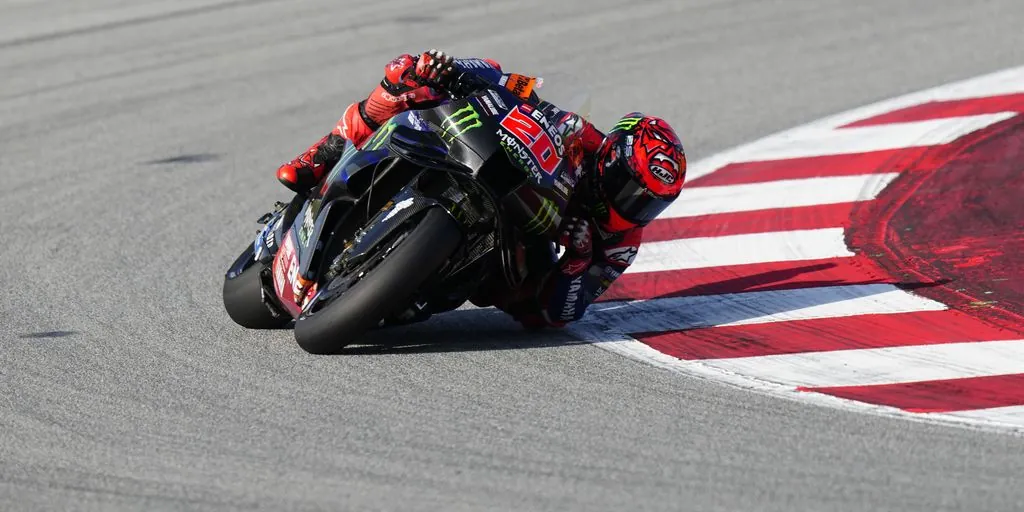
A MotoGP rider wearing race leathers and a helmet, riding a black and blue Yamaha motorcycle with number 20 and Monster Energy livery, leaning steeply into a corner on an asphalt track alongside red and white striped kerbing.

The Disciplinary Baseline and In-Race Sanction

In modern Grand Prix motorcycle racing, moving before the red lights extinguish is officially classified in the FIM Grand Prix World Championship Regulations as anticipating the start. While overall track sessions are overseen by Race Direction, false start infractions fall under the authority of the FIM MotoGP Stewards Panel, which consistently issues two Long Lap Penalties across both full Grand Prix races and Sprint events.

Under official MotoGP jump start penalty rules, penalised riders must leave the standard racing line to complete an elongated track loop on two separate laps. Stewards notify the competitor directly by flashing yellow dashboard lights and displaying the text prompt L LAP X2, while supplementary notices appear on trackside boards and pit wall timing screens.

Reading the Lap Time Data and Escalation Limits

When evaluating timing sheets, an observer can typically spot a Long Lap penalty by looking for individual laps running roughly 2 to 4 seconds slower than a rider's prevailing pace, with 3 seconds serving as a common baseline. Because serving two distinct loops demands running off-line twice, the accumulated time deficit compounds, frequently demoting riders through the running order depending on pack density.

Crucially, timing anomalies can also reflect severe disciplinary escalation. If a competitor repeatedly ignores the dashboard instructions to serve the penalty, the stewards are empowered to impose a pit lane ride-through under the 60 km/h speed limit or substitute an added post-race time penalty of up to two minutes.

Official reference: Grand Prix racing explained: How the MotoGP™ championship works and key rules.

How Post-Race Timing Audits Shape IMSA Results

A front-three-quarter view of a white, red, and black #4 Audi 90 Quattro IMSA GTO race car driving on an asphalt course, with grass and straw bales visible in the background.

How Official Stint Audits Function

In IMSA endurance competition, a car crossing the finish line on the lead lap does not guarantee its final standing. Post-race timing and scoring audits verify that every driver met their designated track duration requirements. Under IMSA Standard Sporting Regulations (SSR) 12.13.2, entries with silver- or bronze-rated drivers must satisfy assigned minimum drive times, while every remaining co-driver must complete a base drive time outlined in the event supplemental regulations. When evaluating these stint logs, analysts must also account for interruptions; under SSR 12.11.5, mandatory durations are scaled down proportionally if red flags pause the race.

The Enforcement of Article 12.12 Penalties

When timing verification confirms an entry fell short of its threshold, series officials enact Article 12.12. The resulting IMSA minimum drive time penalties demote the offending car behind every finishing competitor in its class that met the drive-time rules, effectively sending the car to the back of the class classification regardless of on-track margin. For example, during the 2019 Rolex 24 At Daytona, post-race audits showed the second-place finishing No. 29 GTD entry and the No. 63 entry missed their stint obligations, dropping them to 22nd and 23rd in class and elevating the next compliant finishers onto the podium. A similar enforcement occurred in the 2018 IMSA Prototype Challenge event at Canadian Tire Motorsport Park, where the first-finishing No. 11 car missed its 40-minute requirement and was relegated to the rear of the class results.

Official reference: IMSA Announces Drive-Time Penalties From Rolex 24 | IMSA.

Thursday, 29 October 2026

Interpreting Stage Times When Pacenotes Fail

A Toyota GR Yaris Rally1 World Rally Championship car navigates a sunlit gravel stage, kicking up a large plume of dust along a track bordered by trees and roadside fencing.

Why Missing Road Guidance Immediately Distorts Split Times

In rally telemetry and split analysis, sudden time loss across a specific sector is frequently attributed to mechanical trouble, tyre degradation, or driver error. However, timing data can also reflect cockpit disruptions that completely alter the driver's decision-making process. Top-tier rally driving depends on continuous anticipatory inputs from the co-driver, allowing drivers to commit to blind crests and high-speed corners before seeing the road ahead. When that flow of information stops, the driver cannot rely on verified entry speeds or braking markers and must brake early, scan visually, and revert entirely to reactive driving.

A sudden disruption like WRC lost pace notes illustrates how cockpit anomalies distort stage performance without indicating an underlying vehicle fault. When M-Sport co-driver Eoin Treacy lost physical hold of his note binder after a harsh jump landing during the opening Cambyretá stage of Rally del Paraguay, driver Josh McErlean had roughly 400 metres before the next junction without pacenote guidance. That brief distance allowed the crew enough time to regroup before the turn, but navigating any blind stretch purely by visual sightlines inevitably forces a defensive pace that shows up on the timing sheets as an unexplained deficit.

Separating Information Deficits From Pure Pace

Discrepancies in stage notes do not only stem from physically dropped binders; reconnaissance limitations can also embed missing or compromised details directly into the timing data. Because crews compile pace notes during reconnaissance under strict low-speed restrictions—such as the 60 km/h cap highlighted by Thierry Neuville on the Shinshiro City stage at Rally Japan 2022—estimating actual high-speed commitments for Rally1 machinery can be extremely difficult. Incomplete or inaccurate notes leave crews vulnerable at competitive speeds, as seen when Takamoto Katsuta conceded 25.9 seconds on stage two of Rally Japan 2026 while managing missing pacenote information alongside an earlier rear-left tyre puncture.

When evaluating stage deficits, analysts must distinguish between raw pace deficits and situational time loss caused by compromised information. An acute time drop over a single split or stage does not necessarily prove reduced driver capability or an inferior vehicle setup. Co-driver interruptions, reconnaissance speed constraints, and road hazards all introduce significant confounding variables that timing data alone cannot isolate without qualitative context from the cockpit.

Official reference: FIA World Rally Championship regulations.

Understanding Outlier Qualifying Gaps in Changing Track Conditions

A motorcycle racer smiles while wearing racing leathers.

How Weather Windows Skew Gap Metrics

A massive margin on a qualifying timesheet often tempts observers to view lap times as a direct measurement of rider supremacy, but changing atmospheric conditions heavily distort comparative data. During qualifying for the 2026 Australian Grand Prix at Phillip Island, the official timing screens showed a pole lap of 1:34.203 establishing a 1.494-second cushion over second place. Rather than indicating an isolated performance gap between machines, that statistical anomaly developed because rain returned intermittently over a damp surface, meaning riders did not complete their best efforts in identical track environments.

Timing Windows Versus Pure Raw Pace

When reporting noted that Marc Marquez Recovers from Turn 4 Crash to Take Australian GP Pole, the sequence of session events explained why the gap expanded so dramatically. After tucking the front on his opening lap at Turn 4, Marquez had to switch to his spare Ducati while rivals like Johann Zarco and Jack Miller navigated intermediate lulls in grip. Because asphalt moisture levels shifted from minute to minute, comparing Marquez's decisive late lap against competitor times set under different degrees of rainfall does not provide an apples-to-apples evaluation of bike or rider performance.

Evaluating motorsport timing data accurately requires distinguishing between stable baseline pace and weather-induced outliers. A gap of nearly 1.5 seconds was the widest in MotoGP qualifying since the 2019 Czech Grand Prix, but tracking sector splits alongside changing weather windows demonstrates that the timing delta reflected fluctuating track conditions as much as execution on the bike.

Official reference: Crash to pole: Marc Marquez delivers Q2 showstopper at Phillip Island.

Interpreting MotoGP Substitute Roles and Recovery Windows at Sepang

A motorcycle racer wearing racing leathers and a cap looks forward.

Injury Context and Rider Absence

Tracking rider availability across consecutive race weekends requires understanding the physical demands placed on specific injuries rather than assuming uniform recovery timetables. During Round 19 of the 2026 MotoGP season, Fermin Aldeguer was sidelined from the Malaysian Grand Prix at Sepang to continue rehabilitating his right hand following surgery. The injury, a fracture at the base of the first metacarpal bone, occurred during a crash while contending for a podium spot at the Indonesian Grand Prix in Mandalika.

Substitute Appearances and Data Limitations

When analyzing timing sheets and team performance during late-season substitute stints, numbers alone cannot tell the full story without operational context. Following the confirmation that Fermin Aldeguer Ruled Out of Malaysian GP as Iker Lecuona Deputises at Sepang, 2026 WorldSBK runner-up Iker Lecuona stepped into the saddle of the number 54 machine for a second consecutive appearance, having previously deputised in Australia. A substitute rider inherits machinery configured around a different competitor, meaning lap times and race results reflect a mix of unfamiliar ergonomic setups, distinct adaptation timelines, and varying track conditions rather than a direct evaluation of baseline capability.

Official reference: Aldeguer out of Malaysian GP.

How NASCAR Restarts Enforce the Choose Rule and Tail-End Sanctions

Stock cars race through a turn on a banked oval track.

Lane Commitment and Lineup Penalties

During double-file restarts in NASCAR, drivers are permitted to select their preferred lane using a designated track mark ahead of the green flag. However, strict commitment guidelines govern that choice. If a driver fails to declare either the inside or outside lane prior to reaching the mark, or attempts to switch lanes after passing it, officials immediately intervene before the green flag drops.

Understanding NASCAR choose cone penalties helps explain sudden shifts in restart positioning, as infractions do not trigger pit road stops but instead relegate the offending car directly to the tail end of the longest line. Analysts tracking track position must note that this sanction reorganises the grid immediately prior to racing resuming, impacting starting deltas rather than race pace.

Origins and Track-Specific Rules

NASCAR adopted this procedure to eliminate deliberate gamesmanship seen under earlier restart rules, where only the leader chose their lane and trailing drivers routinely slowed down or braked on pit road to manipulate their row placement. The process was initially trialled during the July 2020 All-Star Race at Bristol Motor Speedway using an orange V marker, before being expanded into points-paying competition starting at Michigan International Speedway in August 2020.

When reviewing restart data across the national series schedule, observers must also recognise track exclusions. The choose rule applies to most ovals but explicitly excludes road courses and superspeedways, where standard double-file sorting remains in effect. Additionally, managing wave-arounds and free-pass vehicles introduces operational procedural adjustments that can subtly influence line lengths independent of driver preference.

Official reference: NASCAR official news and results.

Understanding MotoGP Ride-Through Penalty Timing and Data Tracking

A motorcycle racer leans into a turn on a paved racing circuit beside a painted kerb.

Tracking the Compliance Window

In professional motorcycle racing timing feeds, a ride-through penalty shifts a competitor's strategic data instantly. Under official sporting regulations, stewards notify the rider through an onboard dashboard instruction, paired with notices sent across timekeeping screens and pit boards. Understanding the exact countdown requires watching line crossings: the three-lap window to comply does not begin at the moment of the broadcast alert, but rather on the rider's first crossing of the finish line after the dashboard message is dispatched.

Riders must navigate through the pit lane without stopping before returning to the racing surface. Timing systems monitor compliance strictly during this period, because failure to enter the pit lane within those allocated three laps triggers a black flag, ending the rider's session via disqualification.

Pit Speed Data and Race Adjustments

Speed trap sensors enforce pit lane safety just as rigorously as the track deadline. Competitors must adhere to designated pit speed limits under Art. 1.21.14 while serving the sanction. If telemetry or transponders show a rider speeding while executing the penalty, stewards escalate the sanction, typically by adding a Double Long Lap penalty or applying steward discretion for repeated breaches.

Understanding these MotoGP ride-through penalty serving rules clarifies how race data handles exceptional disruptions. If a red flag interrupts competition before a notified sanction is served, the requirement carries forward into the restarted segment. When an infraction cannot be signaled before the chequered flag, timing officials replace the on-track pass with a predetermined post-race time penalty communicated to teams before the race, rather than issuing a disqualification.

Official reference: https://www.fim-moto.com/fileadmin/2026_GP_Sporting_Regulations_-_Updates_13_Sept__26.pdf?t=1792878879.

Reading MotoGP Qualifying Times: What Progression and Grid Rows Actually Measure

Close-up of MotoGP rider Fabio Quartararo wearing an HJC helmet with the visor raised and Monster Energy Yamaha racing gear, celebrating with both gloved hands raised in parc fermé or the pit lane.

How Practice Times Cut the Qualifying Field

Timing screens in MotoGP require careful interpretation because starting positions are not decided in a single shootout. Instead, Friday afternoon's 60-minute Practice session provides the baseline cutoff, sending the top 10 riders straight through to Qualifying 2 while relegating the remaining field to Qualifying 1. Understanding how MotoGP Q1 and Q2 qualifying work helps fans distinguish between outright one-lap capability and procedural elimination, especially since Saturday's separate 30-minute Free Practice 2 allows setup adjustments without altering qualifying seeding.

Saturday's competitive running opens with the 15-minute Q1 session, where riders outside Friday's top 10 compete for just two transfer spots into Q2. Third place in Q1 locks in 13th on the starting grid, fourth secures 14th, and the order cascades downward. When analyzing these timesheets, a third-place time in Q1 might occasionally appear competitive with lower Q2 times, but the format permanently fixes positions 13 and below before Q2 begins.

Interpreting Q2 Times and Starting Rows

Qualifying 2 features 12 riders in another 15-minute dash to establish pole position and rows one through four, with bikes arranged three per row. Pole position and row one go to the fastest three riders, while fourth through sixth occupy row two. Making a run through Q1 to reach pole is uncommon but documented: Marc Marquez and Jorge Martin have achieved it twice, with single instances recorded by Maverick Vinales, Francesco Bagnaia, Luca Marini, Alex Marquez, and Fabio Di Giannantonio.

Raw single-lap data from these short sessions does not reflect identical running conditions, however. Pushing on soft-compound slick tyres introduces regulatory variables, such as running over painted green runoff areas where time can be gained, which triggers automatic lap cancellation. Stewards can also issue grid penalties for cruising slowly on the racing line while searching for track position. Furthermore, while weather disruptions have occasionally forced sessions to move to Sunday morning—as in Australia in 2019—or prompted grids to be set from combined practice times, as occurred in Qatar in 2017, normal qualifying establishes the identical grid order for both Saturday's Sprint and Sunday's Grand Prix.

What Qualifying Grid Data Reveals About Race Outcomes

Starting metrics provide strong predictive indicators of race results without serving as an isolated measure of rider pace. Starting near the front grants immediate track position through opening-corner bottlenecks, alongside cleaner air that reduces early tyre wear and fuel consumption relative to riders stuck battling in midfield congestion. In 2024, every Grand Prix winner started within the front three rows (positions one to nine).

Victories from deep on the grid remain historical outliers rather than reliable proof of superior race-day pace in dry conditions. For example, Aleix Espargaro won from 12th on the grid at Silverstone in 2023, marking the lowest dry-weather winning grid slot since Marco Melandri took victory from 14th at the 2006 Turkish Grand Prix. Grid penalties can severely cap potential outcomes regardless of race pace, demonstrated at the 2015 Valencia finale where Valentino Rossi started 26th due to a penalty from Malaysia and recovered to fourth, yet missed the title by five points to pole-winner Jorge Lorenzo.

Official reference: How Does MotoGP™ Qualifying Work? – The Complete Guide.

How Super GT Applies Success Handicaps Beyond Physical Weight

A pack of GT race cars speeds down the main straight during a race.

Nominal Ballast Versus Onboard Weight

Evaluating mid-season lap times and sector performance in Super GT requires understanding how championship handicaps are structured on paper versus on the car. While the baseline calculation awards two kilograms of nominal penalty per championship point up to a total ceiling of 100 kilograms in the GT300 class, the physical weight bolted into the car is strictly capped at 50 kilograms. This ceiling was established after teams highlighted safety concerns regarding excess onboard weight combined with Special BoP adjustments. Consequently, timing data from cars carrying heavy nominal handicaps cannot be evaluated purely as an assessment of chassis dynamics carrying extreme physical ballast.

Pit-Lane Equivalence Through Restrictors

To preserve championship balance when nominal handicaps exceed the 50-kilogram physical cap, the remaining balance is shifted to pit lane operational time. Under the Super GT success ballast rules, organisers mandate a Success refuelling restrictor fitted below the shut-off valve on the fuel rig, extending the duration of pit stops. Analysts examining race strategy must note that these restrictor diameters are calibrated against each car's individual Balance of Performance fuel flow values in pre-event bulletins, meaning elapsed pit stop times reflect a regulated regulatory penalty rather than crew execution speed alone.

Late-Season Scaling and Performance Resets

Handicap metrics also shift dynamically across the championship calendar, meaning mid-season performance deficits do not remain static. In the penultimate round, the multiplier drops to 1.5 kilograms per point, before resetting completely to zero for the final round for entrants that contested all eight events. Comparing stage-by-stage race pace across different phases of the calendar therefore reflects scheduled administrative tapering rather than sudden aerodynamic or mechanical development steps.

Official reference: SUPER GT official series information and results.

Wednesday, 28 October 2026

Reading MotoGP Medical and Points Data After Jorge Martin's Phillip Island Crash

A close-up of a motorcycle racer wearing sunglasses, a cap, and racing leathers with a bandage across his nose.

Diagnostic Imaging and Interpreting Medical Data

Medical bulletins in grand prix motorcycle racing often evolve quickly across a race weekend as initial trackside findings are refined by hospital imaging. At Phillip Island, initial X-rays taken at the circuit medical centre pointed to a radius fracture alongside a suspected distal ulna fracture following an incident on lap eight of Saturday's Sprint at Turn 8 while contending for the lead. However, subsequent hospital CT scans eliminated the suspected ulna issue, confirming solely a non-displaced fracture of the distal radius. Understanding diagnostic data requires distinguishing preliminary screening notes from definitive scans, which dictate management choices such as avoiding long-haul travel when local care suffices.

Quantifying Championship Point Swings

Beyond physical assessment, weekend incidents alter championship arithmetic instantly, though raw standings require context regarding remaining scoring opportunities. Following the Sprint crash, Martin was declared unfit for Sunday's main race, transferring the title lead to Marc Marquez and establishing a ten-point deficit. As Aprilia addressed the rider's immediate rehabilitation plans, reporting around the event noted that Jorge Martin Will Not Return to Spain After Distal Radius Fracture, opting instead for treatment without a long-haul flight while his condition is monitored. With 173 points still available from the Australian Grand Prix through the season finale in Valencia, the ten-point gap represents an immediate deficit rather than a definitive title outcome.

Official reference: Martin update: 2024 Champion won’t return to Spain for treatment.

Why Moto2 Qualifying Lap Times Require Context Beyond Pure Pace

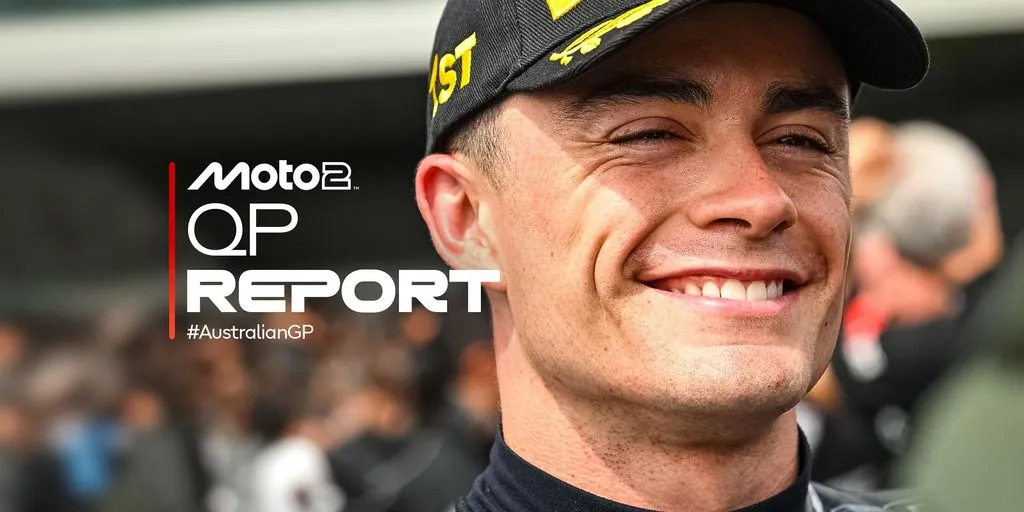
Close-up photograph of a smiling motorcycle racer wearing a black cap marked '1ST' on the side and a racing suit. On the left side of the frame is a graphic overlay reading 'Moto2 QP REPORT #AustralianGP'.

Reading Single-Lap Margins in Disrupted Sessions

A qualifying timesheet lists riders in order of their best lap times, but treating the final order as an absolute hierarchy of machine or rider pace can be misleading. In the 2026 Australian Moto2 Grand Prix qualifying session at Phillip Island, the top ten riders were separated by just 0.212 seconds. However, that narrow window occurred within a session shaped by significant track disruptions, most notably a heavy Turn 8 crash by Senna Agius with roughly four minutes remaining.

Yellow flags triggered by an off-track incident invalidate or severely compromise flying laps for anyone passing through that sector. When analyzing qualifying data, timing and track position determine who gets a clean lap just as much as vehicle setup. While Manuel Gonzalez Claims Australian GP Moto2 Pole for 100th Grand Prix with a 1:30.122, both he and second-placed Barry Baltus had completed their flying efforts past Turn 8 before the incident escalated, leaving contenders like Izan Guevara, David Alonso, and Taiyo Furusato facing compromised laps.

The Impact of Aerodynamic Tows and Timing Windows

Beyond localized incidents, intermediate-class lap times frequently reflect aerodynamic assistance. Filip Salac secured third on the grid by picking up a slipstream behind Guevara, producing a 1:30.237 that jumped several riders whose times had been logged in clean air or under interrupted runs. In data analysis, isolated lap times cannot distinguish between solo aerodynamic resistance and tow-assisted gains unless telemetry or sector timing data is factored in.

Similarly, Agius held provisional pole earlier in Q2 and finished seventh overall despite his crash, finishing ahead of riders who completed the session without an accident. This highlights that a qualifying ranking shows the single best legal lap logged during the allotted minutes, rather than consistent race pace or guaranteed superiority over thirty laps.

Official reference: Gonzalez strikes pole as Championship battle heats up.

Reading Beyond Sprint Points in MotoGP Title Swings

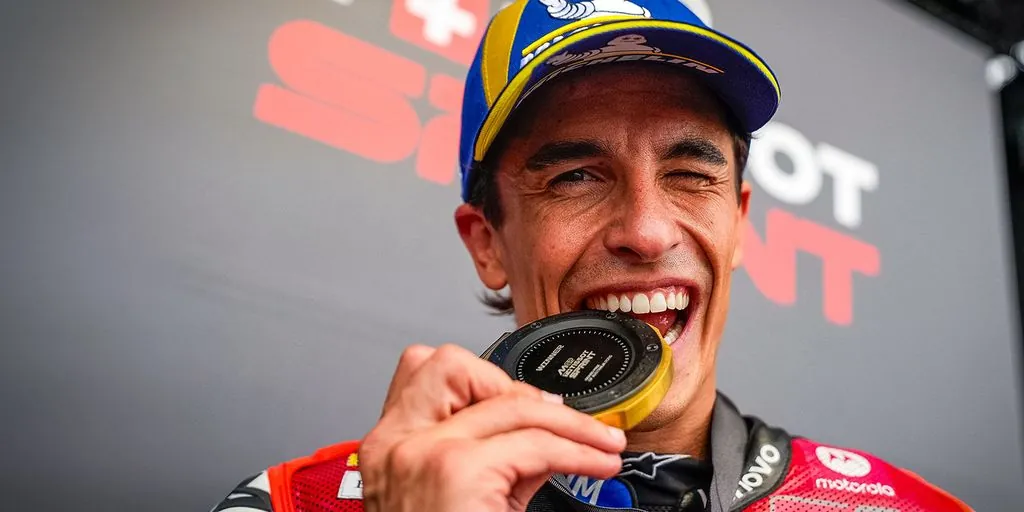
A motorcycle racer smiles and bites a sprint winner medal while celebrating.

Interpreting Sprint Outlier Data and Attrition

Evaluating championship tables requires separating raw point shifts from single-race mechanical and riding variables. In the report Marc Marquez Takes Title Lead as Martin Crashes Out in Phillip Island Sprint, the headline shift reflects high-stakes track incidents rather than pure pace differentials alone. Marc Marquez secured his ninth Saturday sprint win of the 2026 season for Ducati, while title rival Jorge Martin lost the standings lead after crashing his Aprilia at Turn 8 on Lap 8. The sequence began when Martin ran over the Turn 7 kerb while pursuing Marquez, unsettling the bike before losing front tyre grip. Because a crash and subsequent weekend-ending injury remove a contender from further scoring, point margins can change drastically in a single afternoon without demonstrating an inherent machine advantage across changing conditions.

Post-Race Penalties and Classification Caveats

Final classifications also mask on-track performance due to technical compliance measures rather than outright speed. Ai Ogura originally crossed the line sixth on the SuperFile Trackhouse machine but dropped out of the scoring positions after an eight-second post-sprint tyre pressure sanction. That adjustment reshuffled the finishing order by promoting Brad Binder to sixth and elevating Iker Lecuona into the final point-scoring position in ninth. With Alex Marquez and Fabio Di Giannantonio rounding out an all-Ducati podium amid late, intermittent rain drops, the recorded timing gaps and finishing tiers highlight how technical rule enforcement, rider retirements, and weather shifts influence recorded results.

Official reference: Marc Marquez takes title lead with Sprint win, Martin crashes out of epic battle.

Reading Friday Practice Times Without Misinterpreting Phillip Island Pace

A motorcycle racer leans into a turn on an asphalt circuit.

What Practice Times Actually Measure

Single-lap practice times illustrate which machinery and riders managed an optimal flying lap during the session window, but they do not provide a complete picture of overall race capability. At Phillip Island in October 2026, Marco Bezzecchi Tops Friday MotoGP Practice at Phillip Island as Aprilias Surge, leading the afternoon timing screens with a lap of 1’26.775 after recovering from an earlier crash and red flag. While placing four Aprilia RS-GP machines among the top five demonstrated strong single-lap pace on that specific afternoon, practice lap charts reflect targeted time-attack runs to secure top-ten spots rather than identical long-run race simulations.

Understanding Margin and Session Interruptions

Data from interrupted sessions requires careful context. The Friday afternoon running saw two separate red flags within the opening twenty minutes—one triggered by a tumble and track debris from an incident involving Bezzecchi and Alex Marquez at Turn 4, and another caused by wildlife crossing the track. Additionally, late yellow flags from Alex Marquez at Turn 4 altered the final minutes of flying laps. These stoppages disrupt tire preparation and prevent riders from following uniform run plans.

Narrow Spreads and the Q1 Cutoff

A tightly clustered timing sheet highlights how easily session circumstances can influence classification. Behind Bezzecchi, Raul Fernandez, Marc Marquez, Ai Ogura, and Jorge Martin, the battle for the top ten remained razor-thin, with Enea Bastianini in seventh edging Pedro Acosta in eighth by just 0.026 seconds. Across the field, 14 riders were covered by under a second, and positions 11 through 19 were separated by less than six tenths. Because factors such as tow availability, red flags, and yellow-flag lap cancellations affect these narrow margins, a driver or rider ending up in Qualifying 1 is a reflection of session execution under varying circumstances rather than a direct, definitive ranking of machine or rider performance.

Official reference: Bezzecchi fastest on Friday at Phillip Island, Aprilias gang-up on Marc Marquez.

Understanding the Regulatory Window for MotoGP Double Long Lap Penalties

A Grand Prix motorcycle rider leans through a turn on a racetrack.

Timing the Five-Lap Execution Window

Race timing monitors often reveal an immediate shift in pace when stewards assign an infraction, but evaluating the tactical impact requires understanding how MotoGP double long lap penalties are served under the sporting regulations. Under FIM Article 1.19.2, the compliance count does not initiate at the precise instant of the incident or decision. Rather, the formal serving window begins once the competitor crosses the finish line for the first time after the notification transmits to their onboard dashboard.

From that initial crossing, the rider receives an allotment of five laps to complete both passes through the designated asphalt corridor. Because official timekeeping systems simultaneously transmit the sanction to pit crews and broadcast monitors, teams can track the remaining laps and alert their rider using pit board signals to prevent procedural missed deadlines.

Handling Caution Flags and Corridor Limits

Lap-by-lap timing traces during penalty sequences can show varying time losses depending on track status and route execution. A competitor cannot enter the loop if caution signals or yellow flags are active across the penalty sector. When an incident closes that portion of the track, the regulations add an extra lap to the rider's compliance window for each unusable lap, preventing an unfair timing crunch.

The physical execution also requires strict adherence to painted white boundary lines marked on the outer runoff of the chosen turn. Straying beyond these markers can prompt stewards to void the effort and order a repeat attempt, while overtaking remains forbidden throughout the lane. Riders must also safely merge back onto the racing surface without compromising other competitors.

Noncompliance Escalation Versus Late-Race Conversions

When reading race results and timing sheets, observers must distinguish between an unserved penalty escalation and a standard time conversion. If a rider exceeds the allotted five laps without completing both mandatory loops, the penalty escalates into a pit lane ride-through rather than an automatic post-race time penalty. Failing to enter pit lane within three laps of that subsequent instruction results in a black flag disqualification.

By contrast, an equivalent time addition is primarily reserved for scenarios where late-race timing leaves insufficient laps to notify or execute the sanction, or when a race is stopped before completion and not restarted. Interpreting the timing screen correctly requires tracking whether lost seconds stem from mandatory route detours, caution-period extensions, or procedural adjustments applied by race direction.

Official reference: https://www.fim-moto.com/fileadmin/2026_GP_Sporting_Regulations_-_Updates_13_Sept__26.pdf?t=1792877218.

How IMSA Pit Stop Timing Constrains Driver Changes

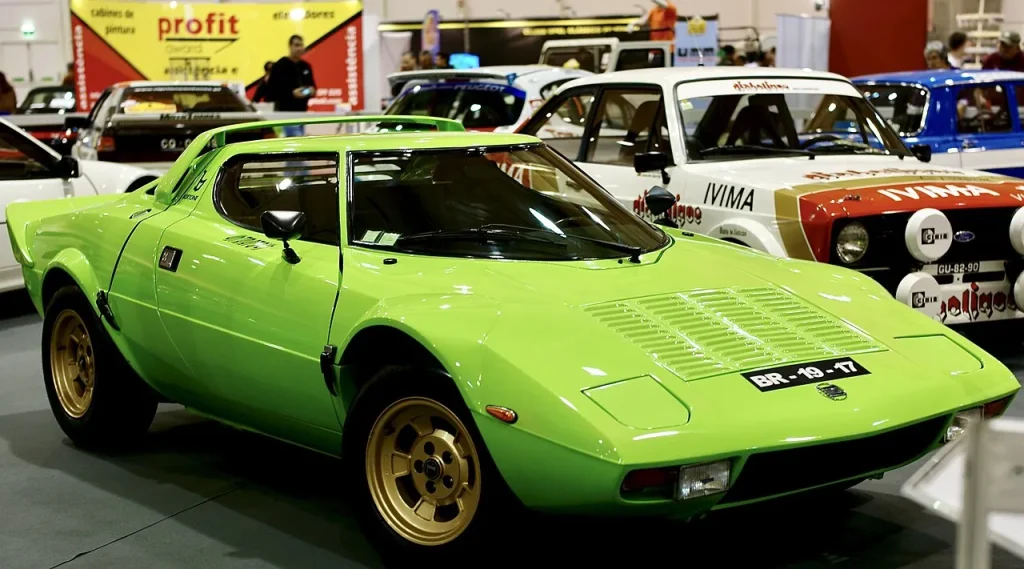
A Lancia Stratos HF sports car.

The 25-Second Service Target

In IMSA competition, routine pit servicing involving four tires and fuel commonly finishes in under 25 seconds. When evaluating pit performance, timing data reflects the entire duration a car spends stationary, which creates an operational window for the cockpit swap. Under IMSA endurance racing driver change rules, the swap must occur while adhering to strict crew allocations rather than unlimited trackside assistance.

While four crew members carry out mechanical tasks such as changing tires, refueling, or swapping brake pads, exactly one designated crew helper is allowed over the pit wall specifically to handle the driver change. Pit wall crossings are forbidden until the car stops completely in its stall. That single helper coordinates egress, places custom seat inserts when teammates require different physical positions, fastens safety belts, and links vital umbilicals including radio, helmet air hoses, and hydration lines.

Reading the Strategy Behind Driver Change Benchmarks

Completing a cockpit exchange within an estimated 25 to 30 seconds allows teams tactical flexibility, such as servicing only two tires without having the stationary interval extended by the driver swap. However, pit delta times should not be read as pure indicators of mechanical efficiency or athletic movement in isolation. A delay in the stall may stem from a stubborn harness latch, connection issues with radio or drink lines, or broader strategy calls rather than a basic physical mistake.

Lineup rules also shape these transitions across different rounds. Standard IMSA races mandate at least two drivers, whereas major endurance events at Daytona, Sebring, Watkins Glen, and Road Atlanta permit three or four. In every scenario, safety measures such as the strictly enforced 60 km/h pit-lane limit impose constant boundaries on pit road transit times, reminding observers that overall lane times reflect regulatory limits as much as crew execution speed.

Official reference: Art of the Driver Change: Poetry (or Comedy) in Motion | IMSA.

Tracking WRC Tyres: What Barcode and RFID Scans Actually Confirm

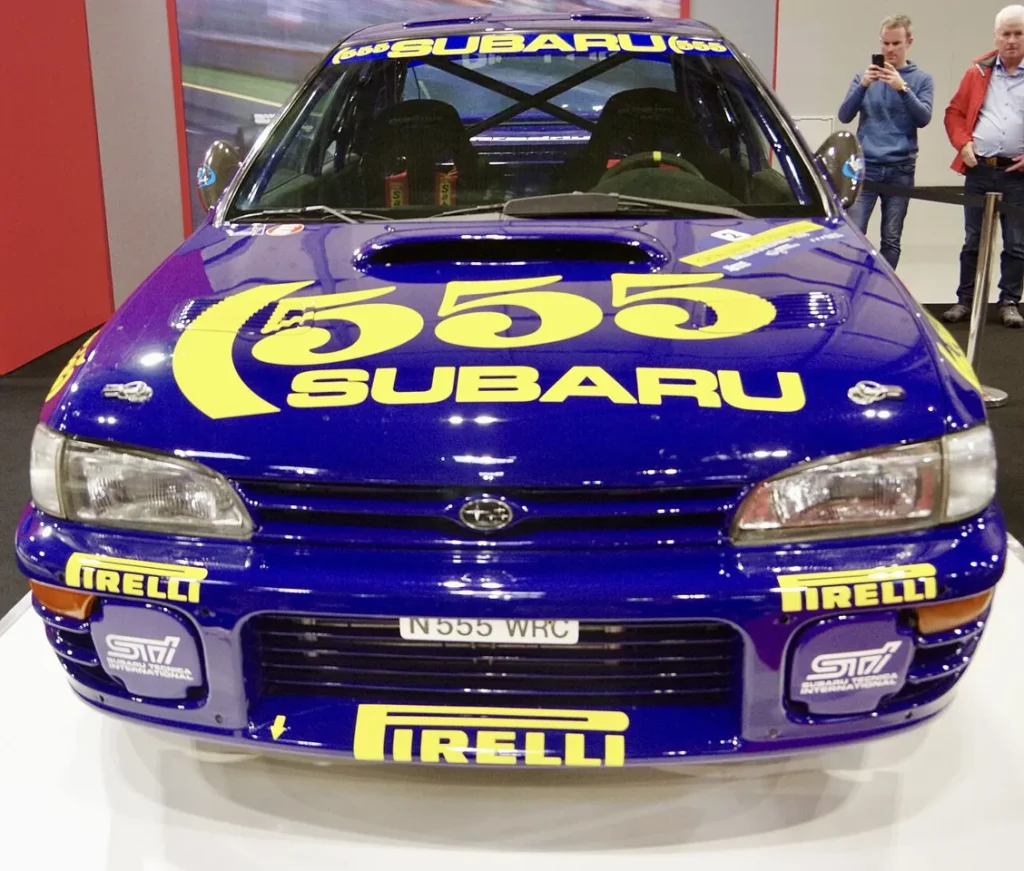
A rally car is on display indoors.

Tracking Tyres from Factory to Service Park

In the FIA World Rally Championship, officials regulate tyre usage by registering every competition tyre intended for four-wheel-drive entries before competition begins. Embedded Radio Frequency Identification tags are built directly into the tyre structure prior to moulding and vulcanisation, accompanied by unique external barcodes. For 2026, designated supplier Hankook compiles barcode lists under FIA oversight to allocate specific sets to individual P1 drivers and supply registered lists for Junior WRC competitors. When scrutineers review this WRC tyre marking explained at exit gates, the resulting scan data logs custody and verifies compliance against entry quotas, rather than detailing how a compound is performing.

Scrutineering Checkpoints and Stage Restrictions

Physical verification occurs at designated marking stations positioned when cars exit service parks, Remote Service Zones, or Tyre Fitting Zones. At these points, a single team member per car may assist officials with scanning RFID chips and barcodes, while shakedown uses a technical zone checkpoint where crew assistants are excluded. Complete wheels can only be mounted, dismounted, or swapped in authorised service and tyre zones, requiring any onboard spares to stay with the car across the loop. Non-registered pattern tyres from the official supplier are acceptable strictly on liaison road sections, but special stages require strictly logged rubber.

Interpreting Inspection Data and Caveats

While barcode records prevent teams from deploying unauthorised compounds or exceeding event limits, this logging should not be conflated with performance metrics. Scans confirm administrative eligibility and serial identification, but they do not capture live wear rates, running pressures, or surface interactions. Manufacturer technicians can examine tyres and gather operating condition data at stage finish points, yet any subsequent telemetry or inspection notes remain subject to variable stage surfaces and ambient conditions rather than demonstrating an absolute measure of tyre life or car balance.

Official reference: https://www.fia.com/system/files/documents/wrc_2026_sr_version_13_january_2026.pdf.

Tuesday, 27 October 2026

Interpreting Flag-to-Flag Lap Times and Pit Stop Data in MotoGP

Marc Márquez riding the #93 Repsol Honda MotoGP motorcycle, leaning into a corner on an asphalt circuit alongside red-and-white striped kerbing. The rider is wearing branded Repsol Honda leathers and a helmet, with visible Honda, Repsol, and Red Bull liveries.

The Time Cost of Flag-to-Flag Pit Stops

When analysing Grand Prix timing sheets during mixed-weather events, a sudden drop in a rider's position often comes down to pit-lane transit times rather than pure riding pace. Under MotoGP flag-to-flag regulations, premier-class competitors are permitted to change machines as often as they wish between their two allocated motorcycles once race direction signals the condition or declares a wet race. However, negotiating pit lane requires adhering to a strict 60 km/h speed limit between timing markers, drawing an automatic double Long Lap penalty if breached. This transit at reduced speed consumes tens of seconds, skewing sector times and making pit-stop laps dramatically slower than full-speed running.

Reading Lap Deltas and Timing Multiple Swaps

Timing screens alone do not reveal tyre grip, so analysts must cross-reference lap times against the track evolution. While modern rules leave tyre selections unrestricted during flag-to-flag conditions—allowing switches between slicks, wet rubber, or even identical set-ups—tactical missteps create severe timing deficits. For instance, at Misano in 2024, Jorge Martin pitted for rain tyres when light rain fell, only for the weather to clear almost immediately. That choice necessitated a second stop to return to slicks, dropping him down the order to a 15th-place finish while competitors who stayed out preserved their track position. Outside exceptional safety mandates such as the 2013 Australian Grand Prix, where tyre longevity limits required a compulsory switch by lap 10, MotoGP multiple bike changes represent a calculated trade-off where the lap-time penalty of the pit lane must be offset by substantially faster subsequent laps.

Official reference: How Do MotoGP™ Riders Switch Bikes During a Race?.

Why Grounded Medical Helicopters Delay Circuit Running

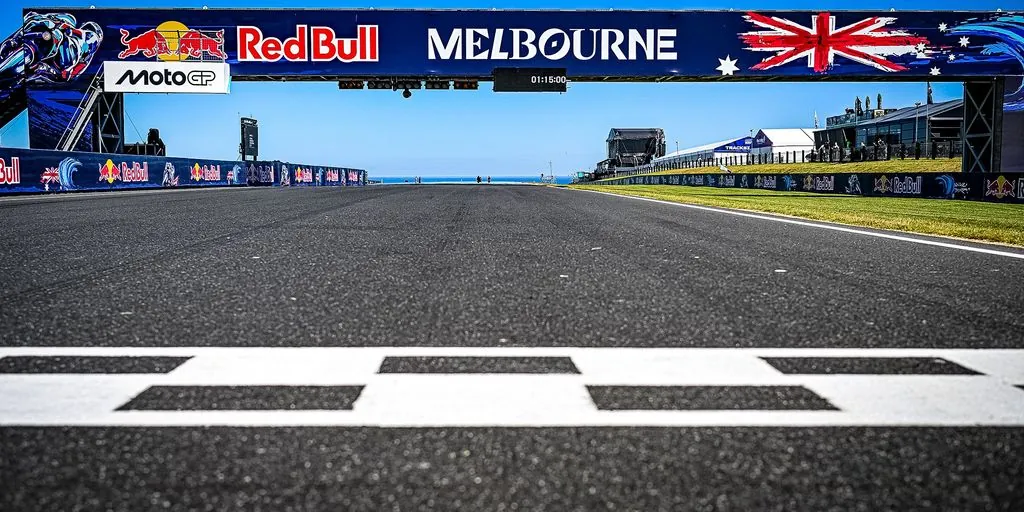
An empty race track straight extends from the start-finish line beneath an overhead gantry.

Safety Standards and Resumption Estimates

Track action at a Grand Prix can be halted even when tarmac conditions look acceptable, as demonstrated when the MotoGP Australian GP Delayed as Reduced Visibility Grounds Medical Helicopter issue arose at Phillip Island during Sunday running in October 2026. Organisers initially indicated track activity would wait for visibility improvements, targeting an estimated resumption window around 11:00 local time with a 10-minute warm-up session planned first. When looking at timetable updates during a stoppage, target restart times should be treated as operational estimates rather than guaranteed clearances, since flight safety depends on evolving local conditions.

Regulatory Air and Road Transfer Limits

The delay stems from strict logistical safety parameters set by Article 5.3.12 of the FIM Grand Prix World Championship Regulations. The framework normally mandates a fully equipped medical evacuation helicopter flown by an experienced pilot, positioned near the medical centre to avoid interim ambulance transfers, and capable of reaching a designated hospital within a standard guidance window of 20 minutes by air. While Article 5.3.12(c) allows ground ambulance alternatives if authorized after medical consultation, regulations advise that the hospital should normally be within 45 minutes by road. If transit times exceed reasonable distance and air support cannot fly, rules recommend considering stopping the event. Where race communications do not specify whether road transfers were considered or approved, fans cannot infer whether ground logistics were unviable or simply undecided.

Official reference: LATEST: MotoGP Phillip Island track activity delayed.

Understanding IMSA Pit Lane Speed Limits and Enforced Penalties

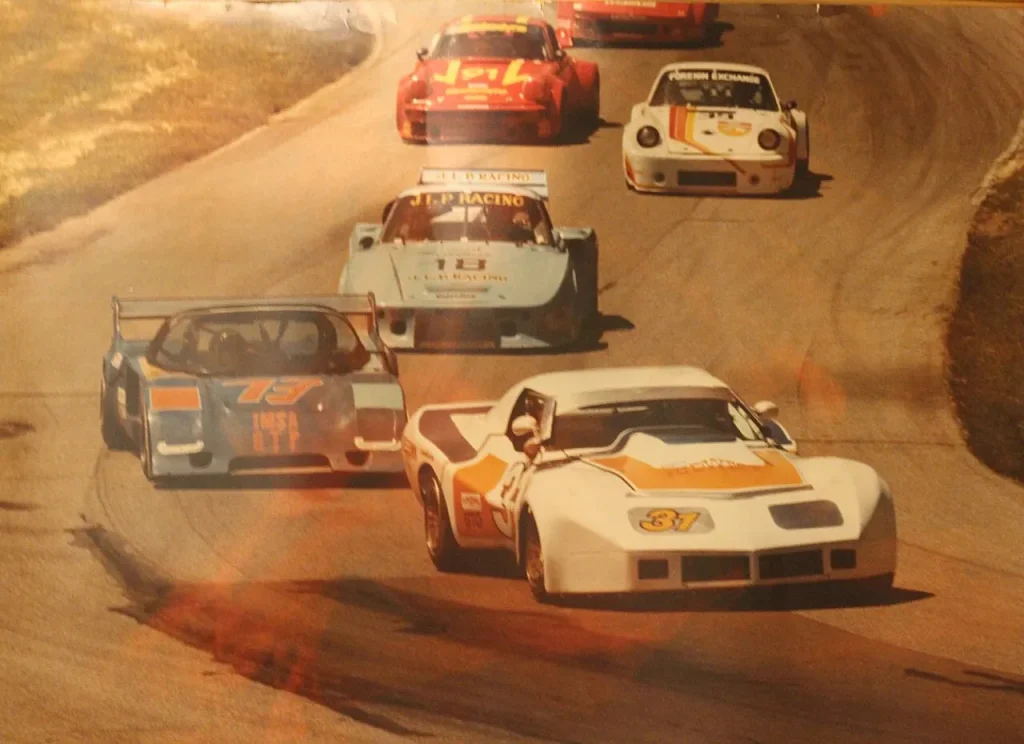
A group of IMSA sports cars navigating a turn on an asphalt circuit, prominently featuring a white and orange Chevrolet Corvette (No. 31) with GTO markings alongside a light blue GTP prototype (No. 73) displaying 'IMSA GTP' lettering on the nose, trailed by a light blue J.L.P. Racing.

The Baseline Speed Regulation

In the IMSA WeatherTech SportsCar Championship, speed monitoring along pit road is governed by strict numerical thresholds rather than subjective assessment. Across every competing class, the maximum permissible speed in the pit lane is set at 60 km/h. This fixed metric establishes a clear operational baseline for race control tracking system monitors and pit lane timing lines.

How Speeding Infractions Are Penalised

When vehicle telemetry or timing beacons confirm a car has breached the standard IMSA pit lane speed limit rules, race control responds with a mandated drive-through penalty. To serve this sanction, the car must enter and transit the entire pit road at or below the 60 km/h cap without taking on fresh tyres, fuel, or receiving mechanical repairs.

A drive-through penalty directly affects race timing by imposing the transit duration of pit lane without the operational benefit of a service stop. If a competitor refuses to serve the required penalty or exhibits severe noncompliance with race control directives, officials can escalate enforcement to a black flag, ordering the car off the racing surface and directly to the pit box.

Pit Road Context and Crew Protocols

The speed limit represents only one component of pit lane procedural regulations. The speed ceiling works directly with safety restrictions on personnel movement, including requirements that crew members remain behind the pit wall until a car reaches a full stop, alongside limits allowing four designated crew members for standard vehicle servicing.

Official reference: WeatherTech: Understanding The Sport | IMSA.

Monday, 26 October 2026

Interpreting NASCAR Cup Road-Course Win Records Across Different Eras

Driver wearing sunglasses, a green cap and a green-and-white AMP racing suit waves beside stock cars, with a crowd behind him.

How Schedule Diversity Shapes All-Time Win Lists

Evaluating the top 10 NASCAR Cup Series drivers with the most road course wins requires understanding how much the series calendar has changed over time. Oval Insider's June 30, 2026 ranking reflects an all-time tally where ties bring the group to 11 competitors. However, counting raw victories combines drivers from eras with entirely different venue selections, meaning total win counts reflect schedule opportunity alongside success rates.

Historical drivers gathered their totals across only one or two recurring road stops. Jeff Gordon amassed all nine of his victories between Sonoma and Watkins Glen, while Tony Stewart collected eight across the same two tracks. Earlier drivers such as Bobby Allison earned all six of his recorded wins at Riverside, and Darrell Waltrip achieved his five victories exclusively there. By contrast, recent competitors race on an expanded catalog of tracks, meaning their win counts span a much broader collection of circuits.

Venue Breadth and Counting Nuances

Modern records illustrate this split in track exposure. Shane van Gisbergen reached eight wins across five different circuits, including street-course events such as the Chicago Street Course alongside traditional road venues like Sonoma, Watkins Glen, the Charlotte Motor Speedway Roval, and Autodromo Hermanos Rodriguez. Chase Elliott's seven victories similarly span five facilities, including Road America, Circuit of the Americas, and the Daytona road course, without any coming from Sonoma.

Because the ranking incorporates street-course events and spans decades of evolving tracks, comparing totals directly does not measure driver proficiency in isolation. Preserving ties also results in three drivers sharing ninth position with five wins apiece: Tim Richmond, Darrell Waltrip, and Martin Truex Jr. Reading the tally accurately requires acknowledging these track allocations, era differences, and list criteria rather than viewing win numbers as a standardized baseline across generations.

Official reference: NASCAR official road-course winners list.

Sunday, 25 October 2026

Why Finishing Margins Depend on How a Race Ends

Open-wheel racing cars spread across the Indianapolis main straight beside crowded grandstands and a flag stand.

Filtering by Flag Conditions Changes the Record Books

Evaluating historical timing data requires understanding the criteria used to build any given leaderboard. In listings such as the top 10 closest finishes in Indianapolis 500 history, selecting only races completed under green-flag conditions produces a very specific dataset. Because caution periods freeze the running order, races that end under yellow flags can record tiny fractional gaps between cars that are not actively racing to the line, such as Dario Franchitti winning under caution by 0.0295 seconds in 2012 or Takuma Sato crossing the line 0.0577 seconds ahead in 2020. Excluding caution endings isolates competitive, full-speed drag races, but it also means the ranking reflects a filtered subset rather than an absolute tally of every recorded split at the finish line.

Under purely green-flag conditions, the timing benchmark shifted in 2026 when Felix Rosenqvist finished 0.0233 seconds ahead of David Malukas. That eclipsed Al Unser Jr.'s long-standing 1992 margin of 0.043 seconds over Scott Goodyear. However, analysts must be careful not to treat timing intervals across different eras as identical measures of competition. The physical dynamics behind each interval vary widely, ranging from final-corner overtakes to defenders holding off a drafting pursuer down the front straight.

Different Circumstances Produce Similar Numbers

A slim timing delta does not reveal how the race arrived at that point. Several tight finishes in the data, including Rosenqvist over Malukas in 2026 and Josef Newgarden over Marcus Ericsson in 2023 (0.097 seconds), were decided after late red flags or cautions compressed the field into single-lap sprints. In contrast, Gordon Johncock's 0.160-second win over Rick Mears in 1982 occurred after Johncock lost an 11-second advantage due to handling trouble over a longer run, surviving an attack at the line rather than a staged sprint.

Furthermore, multiple finishes on the green-flag list feature teammates competing against one another, such as Juan Pablo Montoya edging Will Power by 0.104 seconds in 2015 and Gil de Ferran topping Helio Castroneves by 0.299 seconds in 2003. Reading these recorded gaps solely as expressions of raw pace overlooks how restart timing, mechanical wear, drafting effects, and team context shape the final fractions of a second.

Official reference: INDYCAR official 2026 Indianapolis 500 event and results.

Interpreting Pit Road Speeding Data: What Timing Loops Actually Record

Red No. 57 Chevrolet racing truck on pit road, with crews and pit equipment behind it.

Average Pace Versus Instantaneous Speed

A pit lane speeding penalty often looks like an open-and-shut reading, but the underlying data does not represent a snapshot from a radar gun. Understanding how NASCAR measures pit road speeding between timing lines clarifies why a penalty reflects elapsed time across a mapped distance rather than an instantaneous vehicle velocity at any single point.

Scoring loops embedded in the track surface register each car's transponder as it passes. Official timing systems calculate the average speed across that designated segment by dividing the known distance by the elapsed seconds between loop detections. Because the calculation assesses only the entry and exit timestamps, it does not trace how the driver modulated the throttle or brakes within that stretch.

Why Single Segments Limit Tactical Averaging

Because pit road is divided into multiple independent intervals, compliance in one zone does not offset a violation in another. If a driver remains stationary in their pit stall within a specific segment, those idle seconds lengthen the total elapsed time for that stretch alone, suppressing that segment's average. Once the car crosses the subsequent loop, however, the clock resets, leaving zero buffer to absorb rapid acceleration in the next segment.

The physical length of these segments also dictates how sensitive the calculated average is to driver inputs. In shorter zones, a momentary spike in wheel speed occupies a greater percentage of the total elapsed travel time, sharply elevating the resulting average. Teams study loop placement to determine where these transitions occur, though instantaneous dashboard tachometer cues never directly display the rolling segment average that officials calculate.

Separating Posted Limits From Enforcement Margins

Interpreting penalty reports also requires distinguishing between the posted pit lane limit and the actual enforcement threshold. Sanctioning bodies commonly maintain a buffer margin above the posted figure, meaning a reported infraction reflects an average that exceeded the tolerated ceiling rather than just the baseline speed limit.

When analyzing pit lane data, spectators should avoid treating segment times as direct proof of continuous throttle control or top speed. A clean pass through a segment proves only that the average transit time remained within allowable bounds, while a breach indicates that the net travel time across two specific lines was too brief.

Official reference: NASCAR explanation of pit-road timing lines and speed enforcement.

Saturday, 24 October 2026

What Circuit Elevation Figures Actually Measure

A red Ferrari leads a dark Red Bull through a circuit corner beside red-and-white kerbing and grass.

Peak-to-Trough Metrics Versus Cumulative Climbing

When comparing gradient across Formula 1 venues, published figures typically capture the difference between a venue's single highest and lowest points rather than the cumulative climbing across a full lap. For instance, discussions of the top 10 F1 circuits with the biggest elevation changes frequently highlight Spa-Francorchamps at 102.2 metres and the Red Bull Ring at 63.5 metres based on a 2024 comparison published by Formula1.com. While these metrics accurately reflect the extreme boundaries of each layout, they do not quantify how much climbing or descending a driver completes across multiple undulations. A venue with several rolling crests may involve more total vertical movement over a lap than a layout with a single sustained slope.

Reading Beyond Single-Corner Highlights

A common pitfall when interpreting vertical metrics is attributing the entire elevation span to a single well-known corner. At Spa-Francorchamps, the sharp transition through Eau Rouge and Raidillon represents only part of the venue's overall 102.2-metre envelope. Similarly, Circuit of the Americas features a prominent uphill charge into Turn 1, yet its total 30.9-metre span is measured between Turn 19-20 and the Turn 1 crest, rather than beginning at the start line. Understanding where the high and low markers sit prevents attributing whole-lap numbers to isolated features.

Dataset Boundaries and Comparative Limits

Rankings drawn from published comparisons must be viewed within the scope of the underlying sample. The ten-track list established in the September 2024 source comparison includes tracks such as Interlagos (43m), Monaco (42m), Suzuka (40.4m), Hungaroring (34.7m), Barcelona (29.6m), Baku (26.8m), and Sepang (22m), but it was not designed to cover every historic or modern Grand Prix circuit. Data analysts and fans should treat these values as specific case studies of maximum vertical displacement rather than an exhaustive audit of all circuits worldwide.

Official reference: Formula1.com’s circuit comparison.