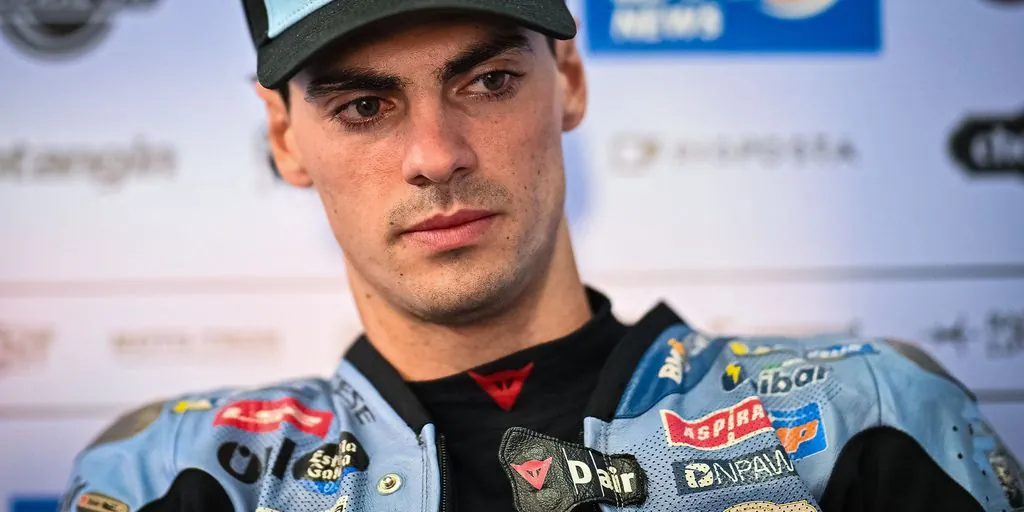
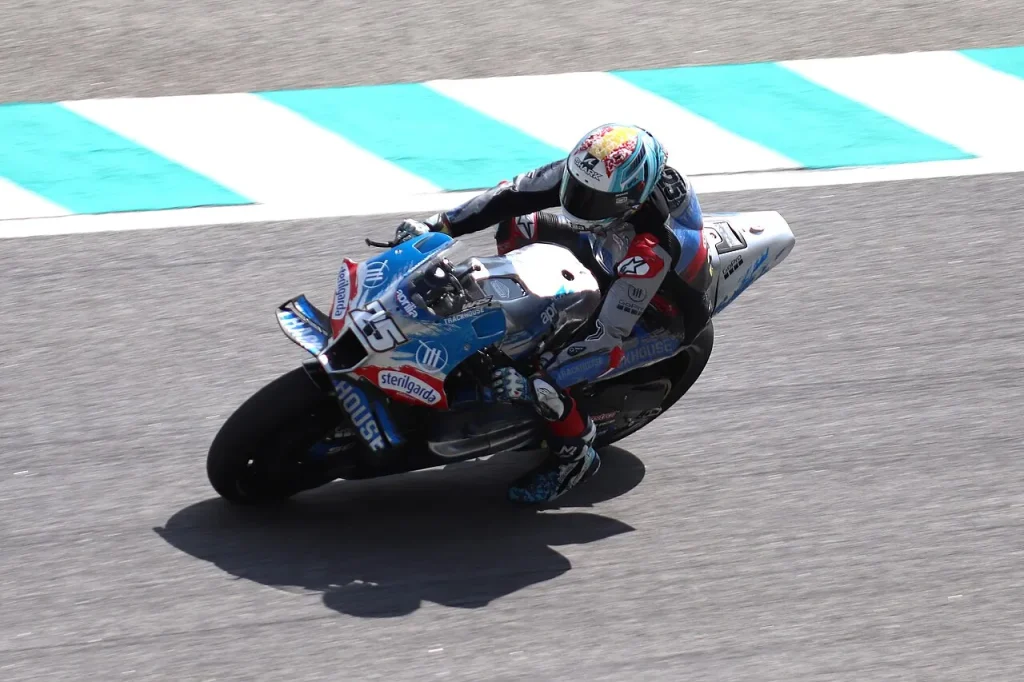
Tracking rider availability across consecutive race weekends requires understanding the physical demands placed on specific injuries rather than assuming uniform recovery timetables. During Round 19 of the 2026 MotoGP season, Fermin Aldeguer was sidelined from the Malaysian Grand Prix at Sepang to continue rehabilitating his right hand following surgery. The injury, a fracture at the base of the first metacarpal bone, occurred during a crash while contending for a podium spot at the Indonesian Grand Prix in Mandalika.
Substitute Appearances and Data Limitations
When analyzing timing sheets and team performance during late-season substitute stints, numbers alone cannot tell the full story without operational context. Following the confirmation that Fermin Aldeguer Ruled Out of Malaysian GP as Iker Lecuona Deputises at Sepang, 2026 WorldSBK runner-up Iker Lecuona stepped into the saddle of the number 54 machine for a second consecutive appearance, having previously deputised in Australia. A substitute rider inherits machinery configured around a different competitor, meaning lap times and race results reflect a mix of unfamiliar ergonomic setups, distinct adaptation timelines, and varying track conditions rather than a direct evaluation of baseline capability.
During double-file restarts in NASCAR, drivers are permitted to select their preferred lane using a designated track mark ahead of the green flag. However, strict commitment guidelines govern that choice. If a driver fails to declare either the inside or outside lane prior to reaching the mark, or attempts to switch lanes after passing it, officials immediately intervene before the green flag drops.
Understanding NASCAR choose cone penalties helps explain sudden shifts in restart positioning, as infractions do not trigger pit road stops but instead relegate the offending car directly to the tail end of the longest line. Analysts tracking track position must note that this sanction reorganises the grid immediately prior to racing resuming, impacting starting deltas rather than race pace.
Origins and Track-Specific Rules
NASCAR adopted this procedure to eliminate deliberate gamesmanship seen under earlier restart rules, where only the leader chose their lane and trailing drivers routinely slowed down or braked on pit road to manipulate their row placement. The process was initially trialled during the July 2020 All-Star Race at Bristol Motor Speedway using an orange V marker, before being expanded into points-paying competition starting at Michigan International Speedway in August 2020.
When reviewing restart data across the national series schedule, observers must also recognise track exclusions. The choose rule applies to most ovals but explicitly excludes road courses and superspeedways, where standard double-file sorting remains in effect. Additionally, managing wave-arounds and free-pass vehicles introduces operational procedural adjustments that can subtly influence line lengths independent of driver preference.
In professional motorcycle racing timing feeds, a ride-through penalty shifts a competitor's strategic data instantly. Under official sporting regulations, stewards notify the rider through an onboard dashboard instruction, paired with notices sent across timekeeping screens and pit boards. Understanding the exact countdown requires watching line crossings: the three-lap window to comply does not begin at the moment of the broadcast alert, but rather on the rider's first crossing of the finish line after the dashboard message is dispatched.
Riders must navigate through the pit lane without stopping before returning to the racing surface. Timing systems monitor compliance strictly during this period, because failure to enter the pit lane within those allocated three laps triggers a black flag, ending the rider's session via disqualification.
Pit Speed Data and Race Adjustments
Speed trap sensors enforce pit lane safety just as rigorously as the track deadline. Competitors must adhere to designated pit speed limits under Art. 1.21.14 while serving the sanction. If telemetry or transponders show a rider speeding while executing the penalty, stewards escalate the sanction, typically by adding a Double Long Lap penalty or applying steward discretion for repeated breaches.
Understanding these MotoGP ride-through penalty serving rules clarifies how race data handles exceptional disruptions. If a red flag interrupts competition before a notified sanction is served, the requirement carries forward into the restarted segment. When an infraction cannot be signaled before the chequered flag, timing officials replace the on-track pass with a predetermined post-race time penalty communicated to teams before the race, rather than issuing a disqualification.
Timing screens in MotoGP require careful interpretation because starting positions are not decided in a single shootout. Instead, Friday afternoon's 60-minute Practice session provides the baseline cutoff, sending the top 10 riders straight through to Qualifying 2 while relegating the remaining field to Qualifying 1. Understanding how MotoGP Q1 and Q2 qualifying work helps fans distinguish between outright one-lap capability and procedural elimination, especially since Saturday's separate 30-minute Free Practice 2 allows setup adjustments without altering qualifying seeding.
Saturday's competitive running opens with the 15-minute Q1 session, where riders outside Friday's top 10 compete for just two transfer spots into Q2. Third place in Q1 locks in 13th on the starting grid, fourth secures 14th, and the order cascades downward. When analyzing these timesheets, a third-place time in Q1 might occasionally appear competitive with lower Q2 times, but the format permanently fixes positions 13 and below before Q2 begins.
Interpreting Q2 Times and Starting Rows
Qualifying 2 features 12 riders in another 15-minute dash to establish pole position and rows one through four, with bikes arranged three per row. Pole position and row one go to the fastest three riders, while fourth through sixth occupy row two. Making a run through Q1 to reach pole is uncommon but documented: Marc Marquez and Jorge Martin have achieved it twice, with single instances recorded by Maverick Vinales, Francesco Bagnaia, Luca Marini, Alex Marquez, and Fabio Di Giannantonio.
Raw single-lap data from these short sessions does not reflect identical running conditions, however. Pushing on soft-compound slick tyres introduces regulatory variables, such as running over painted green runoff areas where time can be gained, which triggers automatic lap cancellation. Stewards can also issue grid penalties for cruising slowly on the racing line while searching for track position. Furthermore, while weather disruptions have occasionally forced sessions to move to Sunday morning—as in Australia in 2019—or prompted grids to be set from combined practice times, as occurred in Qatar in 2017, normal qualifying establishes the identical grid order for both Saturday's Sprint and Sunday's Grand Prix.
What Qualifying Grid Data Reveals About Race Outcomes
Starting metrics provide strong predictive indicators of race results without serving as an isolated measure of rider pace. Starting near the front grants immediate track position through opening-corner bottlenecks, alongside cleaner air that reduces early tyre wear and fuel consumption relative to riders stuck battling in midfield congestion. In 2024, every Grand Prix winner started within the front three rows (positions one to nine).
Victories from deep on the grid remain historical outliers rather than reliable proof of superior race-day pace in dry conditions. For example, Aleix Espargaro won from 12th on the grid at Silverstone in 2023, marking the lowest dry-weather winning grid slot since Marco Melandri took victory from 14th at the 2006 Turkish Grand Prix. Grid penalties can severely cap potential outcomes regardless of race pace, demonstrated at the 2015 Valencia finale where Valentino Rossi started 26th due to a penalty from Malaysia and recovered to fourth, yet missed the title by five points to pole-winner Jorge Lorenzo.
Evaluating mid-season lap times and sector performance in Super GT requires understanding how championship handicaps are structured on paper versus on the car. While the baseline calculation awards two kilograms of nominal penalty per championship point up to a total ceiling of 100 kilograms in the GT300 class, the physical weight bolted into the car is strictly capped at 50 kilograms. This ceiling was established after teams highlighted safety concerns regarding excess onboard weight combined with Special BoP adjustments. Consequently, timing data from cars carrying heavy nominal handicaps cannot be evaluated purely as an assessment of chassis dynamics carrying extreme physical ballast.
Pit-Lane Equivalence Through Restrictors
To preserve championship balance when nominal handicaps exceed the 50-kilogram physical cap, the remaining balance is shifted to pit lane operational time. Under the Super GT success ballast rules, organisers mandate a Success refuelling restrictor fitted below the shut-off valve on the fuel rig, extending the duration of pit stops. Analysts examining race strategy must note that these restrictor diameters are calibrated against each car's individual Balance of Performance fuel flow values in pre-event bulletins, meaning elapsed pit stop times reflect a regulated regulatory penalty rather than crew execution speed alone.
Late-Season Scaling and Performance Resets
Handicap metrics also shift dynamically across the championship calendar, meaning mid-season performance deficits do not remain static. In the penultimate round, the multiplier drops to 1.5 kilograms per point, before resetting completely to zero for the final round for entrants that contested all eight events. Comparing stage-by-stage race pace across different phases of the calendar therefore reflects scheduled administrative tapering rather than sudden aerodynamic or mechanical development steps.
Medical bulletins in grand prix motorcycle racing often evolve quickly across a race weekend as initial trackside findings are refined by hospital imaging. At Phillip Island, initial X-rays taken at the circuit medical centre pointed to a radius fracture alongside a suspected distal ulna fracture following an incident on lap eight of Saturday's Sprint at Turn 8 while contending for the lead. However, subsequent hospital CT scans eliminated the suspected ulna issue, confirming solely a non-displaced fracture of the distal radius. Understanding diagnostic data requires distinguishing preliminary screening notes from definitive scans, which dictate management choices such as avoiding long-haul travel when local care suffices.
Quantifying Championship Point Swings
Beyond physical assessment, weekend incidents alter championship arithmetic instantly, though raw standings require context regarding remaining scoring opportunities. Following the Sprint crash, Martin was declared unfit for Sunday's main race, transferring the title lead to Marc Marquez and establishing a ten-point deficit. As Aprilia addressed the rider's immediate rehabilitation plans, reporting around the event noted that Jorge Martin Will Not Return to Spain After Distal Radius Fracture, opting instead for treatment without a long-haul flight while his condition is monitored. With 173 points still available from the Australian Grand Prix through the season finale in Valencia, the ten-point gap represents an immediate deficit rather than a definitive title outcome.
A qualifying timesheet lists riders in order of their best lap times, but treating the final order as an absolute hierarchy of machine or rider pace can be misleading. In the 2026 Australian Moto2 Grand Prix qualifying session at Phillip Island, the top ten riders were separated by just 0.212 seconds. However, that narrow window occurred within a session shaped by significant track disruptions, most notably a heavy Turn 8 crash by Senna Agius with roughly four minutes remaining.
Yellow flags triggered by an off-track incident invalidate or severely compromise flying laps for anyone passing through that sector. When analyzing qualifying data, timing and track position determine who gets a clean lap just as much as vehicle setup. While Manuel Gonzalez Claims Australian GP Moto2 Pole for 100th Grand Prix with a 1:30.122, both he and second-placed Barry Baltus had completed their flying efforts past Turn 8 before the incident escalated, leaving contenders like Izan Guevara, David Alonso, and Taiyo Furusato facing compromised laps.
The Impact of Aerodynamic Tows and Timing Windows
Beyond localized incidents, intermediate-class lap times frequently reflect aerodynamic assistance. Filip Salac secured third on the grid by picking up a slipstream behind Guevara, producing a 1:30.237 that jumped several riders whose times had been logged in clean air or under interrupted runs. In data analysis, isolated lap times cannot distinguish between solo aerodynamic resistance and tow-assisted gains unless telemetry or sector timing data is factored in.
Similarly, Agius held provisional pole earlier in Q2 and finished seventh overall despite his crash, finishing ahead of riders who completed the session without an accident. This highlights that a qualifying ranking shows the single best legal lap logged during the allotted minutes, rather than consistent race pace or guaranteed superiority over thirty laps.