Friday, 30 October 2026

Interpreting Title Swings and Sprint Setbacks: What Phillip Island Actually Shows

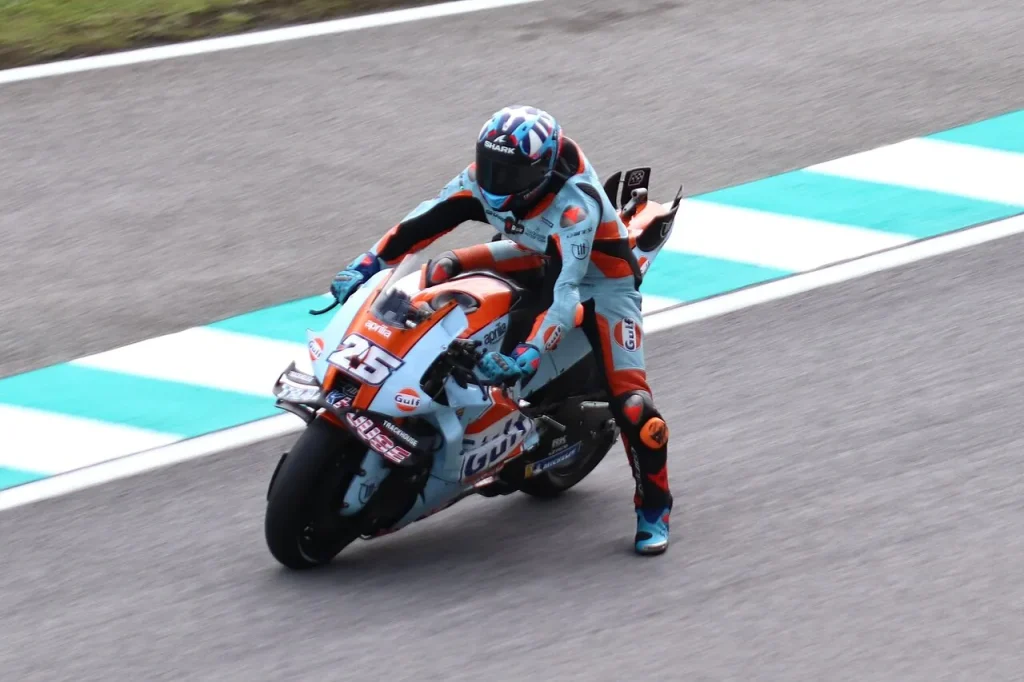
A motorcycle racer wearing racing leathers looks ahead inside a pit garage.

Quantifying Immediate Points Losses Without Projecting Beyond the Data

Championship standings reflect confirmed numerical results rather than future certainty. During the 2026 Australian Grand Prix weekend at Phillip Island, Aprilia Racing rider Jorge Martin entered with the championship lead, but an eighth-lap fall while battling Marc Marquez in the Saturday Sprint resulted in zero points. Marquez took his ninth Sprint victory of the season, creating an immediate numerical points swing that returned him to the championship lead.

While a weekend without points clearly impacts a rider's standing, point totals alone cannot forecast the final outcome of a season. The headline event where Jorge Martin Ruled Out of Australian GP After Phillip Island Sprint Crash demonstrates how sudden zero-score sessions alter the current table without resolving the championship fight itself.

Reading Initial Track Medical Reports and Inherent Diagnostic Limits

Initial medical bulletins released directly from circuit medical centres provide specific diagnostic indicators rather than complete recovery timetables. Following his Turn 8 crash, track medical evaluations confirmed a fracture of Martin's distal radius alongside a suspected distal ulna fracture, leading circuit doctors to declare him unfit for Sunday's Grand Prix.

Data consumers should distinguish between verified findings and provisional notes. Circuit officials confirmed the radius break while designating the ulna fracture as suspected, pending further definitive examinations in Melbourne. Treating preliminary track assessments as comprehensive prognoses overstates what early diagnostics prove before follow-up scans establish a full recovery path.

Official reference: Jorge Martin ruled out of Australian GP after Sprint crash.

How Track Limit Decisions and Off-Track Incidents Are Officiated in MotoGP

A motorcycle racer rides along a paved circuit next to the track kerbing.

Understanding Session Lap Invalidation

In official practice sessions and warm-ups, timing records are adjusted immediately whenever an off-track excursion occurs. Under FIM Grand Prix World Championship regulations, a violation leads to the cancellation of the specific lap time when Race Direction protocols determine that an advantage was gained. Official timing systems register these cancellations by monitoring both the machine and the competitor, including situations where a rider becomes separated from the bike during an incident outside track boundaries.

Race Enforcement and In-Race Communication

Official MotoGP track limits rules require riders to use only the designated track surface and pit lane across all sessions. If a rider leaves the circuit during a race, they are required to rejoin either at a designated location or without securing a competitive advantage. When an advantage is deemed gained or a substantial portion of the layout is missed upon rejoining, the FIM MotoGP Stewards Panel issues in-race penalties.

When a sanction is imposed, notification is delivered to the rider through onboard dashboard signals, pit boards, and shared timing monitors. From an analytical perspective, tracking when a penalty must be served relies strictly on official timing markers: the formal lap window to complete the sanction starts on the first crossing of the finish line after the dashboard dispatch has been logged.

Compliance Deadlines and Decision Finality

Competitors must serve penalties within the specified distance or lap allotment, and failing to comply leads to escalated disciplinary action. Although stewards possess the authority to substitute an assigned sanction with an ordinary time penalty when circumstances demand it, that replacement functions separately from the penalties applied for failing to respect an instruction window.

When evaluating disputed timing sheets or penalty classifications, observers must account for the legal framework governing officiating rulings. Track limit determinations by Race Direction and the FIM MotoGP Stewards Panel are classified as statements of fact decided by judges of fact. Under FIM disciplinary rules, these factual rulings cannot be protested or appealed to higher bodies such as the FIM Appeal Stewards, arbitration tribunals, or civil courts.

Official reference: https://www.fim-moto.com/fileadmin/2026_GP_Sporting_Regulations_-_Updates_13_Sept__26.pdf?t=1792953378.

Evaluating Qualifying Potential Versus Race Durability in MotoGP

A close-up portrait of a motorcycle racer wearing racing leathers.

Interpreting Grid Position Against Physical Limitations

A strong qualifying effort shows single-lap speed, but timing sheets do not measure physical strain over race distances. At the 2026 Australian Grand Prix, Raul Fernandez secured a second-row grid spot for Trackhouse MotoGP Team before injury forced him out during Saturday's running. When examining weekend data, a high grid placement indicates competitive machine setup and transient pace, yet it cannot confirm whether a rider can sustain braking forces and machine control over an entire 27-lap Grand Prix distance.

The decision that Raul Fernandez Withdraws from Australian MotoGP After Sprint Retirement highlights why session results must be interpreted alongside medical realities. Fernandez carried a stable fracture to his right index finger from Mandalika two weeks prior, complicated by soft-tissue inflammation. While the injury allowed short bursts of speed in practice and qualifying, the cumulative pain during the Sprint caused an early exit, demonstrating that baseline lap times cannot account for progressive physical fatigue or localized joint stress.

Reading Future Event Declarations and Session Gaps

Medical status updates provide important context when evaluating performance trajectories across back-to-back rounds. Fernandez was declared unfit ahead of the upcoming Malaysian Grand Prix at Sepang, requiring additional medical evaluation to determine whether recovery allows participation. For data analysts and fans, an unfit status indicates a clinical threshold rather than a failure of technical setup.

Session dropouts alter field dynamics without reflecting mechanical changes. The Phillip Island Sprint saw multiple front-runners exit, including Jorge Martin crashing from second place on Lap 8 at Turn 8. Because attrition changes championship points and finishing distributions, analysts must separate raw machinery performance from circumstantial endurance and injury factors.

Official reference: Fernandez withdraws from Australian GP.

Quantifying the Cost of Anticipating the Start in MotoGP

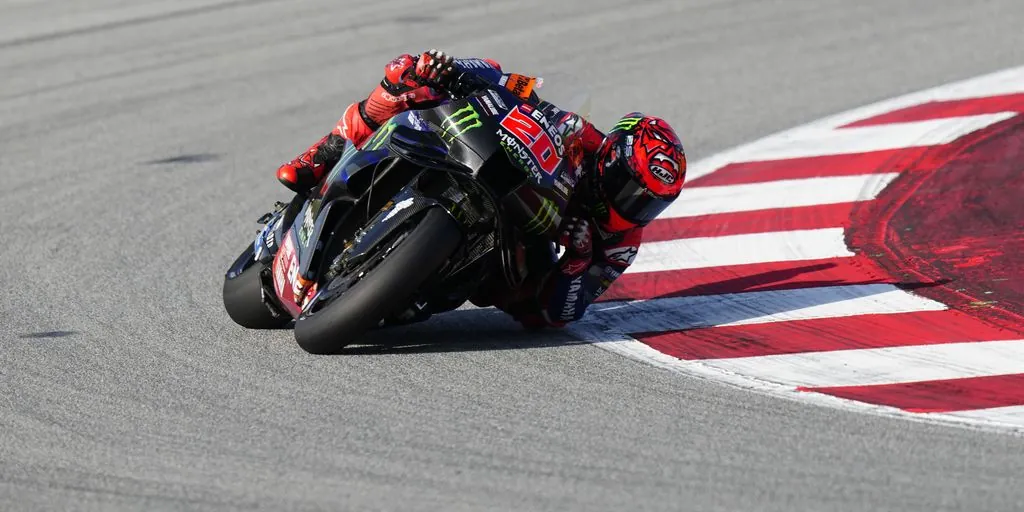
A MotoGP rider wearing race leathers and a helmet, riding a black and blue Yamaha motorcycle with number 20 and Monster Energy livery, leaning steeply into a corner on an asphalt track alongside red and white striped kerbing.

The Disciplinary Baseline and In-Race Sanction

In modern Grand Prix motorcycle racing, moving before the red lights extinguish is officially classified in the FIM Grand Prix World Championship Regulations as anticipating the start. While overall track sessions are overseen by Race Direction, false start infractions fall under the authority of the FIM MotoGP Stewards Panel, which consistently issues two Long Lap Penalties across both full Grand Prix races and Sprint events.

Under official MotoGP jump start penalty rules, penalised riders must leave the standard racing line to complete an elongated track loop on two separate laps. Stewards notify the competitor directly by flashing yellow dashboard lights and displaying the text prompt L LAP X2, while supplementary notices appear on trackside boards and pit wall timing screens.

Reading the Lap Time Data and Escalation Limits

When evaluating timing sheets, an observer can typically spot a Long Lap penalty by looking for individual laps running roughly 2 to 4 seconds slower than a rider's prevailing pace, with 3 seconds serving as a common baseline. Because serving two distinct loops demands running off-line twice, the accumulated time deficit compounds, frequently demoting riders through the running order depending on pack density.

Crucially, timing anomalies can also reflect severe disciplinary escalation. If a competitor repeatedly ignores the dashboard instructions to serve the penalty, the stewards are empowered to impose a pit lane ride-through under the 60 km/h speed limit or substitute an added post-race time penalty of up to two minutes.

Official reference: Grand Prix racing explained: How the MotoGP™ championship works and key rules.

How Post-Race Timing Audits Shape IMSA Results

A front-three-quarter view of a white, red, and black #4 Audi 90 Quattro IMSA GTO race car driving on an asphalt course, with grass and straw bales visible in the background.

How Official Stint Audits Function

In IMSA endurance competition, a car crossing the finish line on the lead lap does not guarantee its final standing. Post-race timing and scoring audits verify that every driver met their designated track duration requirements. Under IMSA Standard Sporting Regulations (SSR) 12.13.2, entries with silver- or bronze-rated drivers must satisfy assigned minimum drive times, while every remaining co-driver must complete a base drive time outlined in the event supplemental regulations. When evaluating these stint logs, analysts must also account for interruptions; under SSR 12.11.5, mandatory durations are scaled down proportionally if red flags pause the race.

The Enforcement of Article 12.12 Penalties

When timing verification confirms an entry fell short of its threshold, series officials enact Article 12.12. The resulting IMSA minimum drive time penalties demote the offending car behind every finishing competitor in its class that met the drive-time rules, effectively sending the car to the back of the class classification regardless of on-track margin. For example, during the 2019 Rolex 24 At Daytona, post-race audits showed the second-place finishing No. 29 GTD entry and the No. 63 entry missed their stint obligations, dropping them to 22nd and 23rd in class and elevating the next compliant finishers onto the podium. A similar enforcement occurred in the 2018 IMSA Prototype Challenge event at Canadian Tire Motorsport Park, where the first-finishing No. 11 car missed its 40-minute requirement and was relegated to the rear of the class results.

Official reference: IMSA Announces Drive-Time Penalties From Rolex 24 | IMSA.

Thursday, 29 October 2026

Interpreting Stage Times When Pacenotes Fail

A Toyota GR Yaris Rally1 World Rally Championship car navigates a sunlit gravel stage, kicking up a large plume of dust along a track bordered by trees and roadside fencing.

Why Missing Road Guidance Immediately Distorts Split Times

In rally telemetry and split analysis, sudden time loss across a specific sector is frequently attributed to mechanical trouble, tyre degradation, or driver error. However, timing data can also reflect cockpit disruptions that completely alter the driver's decision-making process. Top-tier rally driving depends on continuous anticipatory inputs from the co-driver, allowing drivers to commit to blind crests and high-speed corners before seeing the road ahead. When that flow of information stops, the driver cannot rely on verified entry speeds or braking markers and must brake early, scan visually, and revert entirely to reactive driving.

A sudden disruption like WRC lost pace notes illustrates how cockpit anomalies distort stage performance without indicating an underlying vehicle fault. When M-Sport co-driver Eoin Treacy lost physical hold of his note binder after a harsh jump landing during the opening Cambyretá stage of Rally del Paraguay, driver Josh McErlean had roughly 400 metres before the next junction without pacenote guidance. That brief distance allowed the crew enough time to regroup before the turn, but navigating any blind stretch purely by visual sightlines inevitably forces a defensive pace that shows up on the timing sheets as an unexplained deficit.

Separating Information Deficits From Pure Pace

Discrepancies in stage notes do not only stem from physically dropped binders; reconnaissance limitations can also embed missing or compromised details directly into the timing data. Because crews compile pace notes during reconnaissance under strict low-speed restrictions—such as the 60 km/h cap highlighted by Thierry Neuville on the Shinshiro City stage at Rally Japan 2022—estimating actual high-speed commitments for Rally1 machinery can be extremely difficult. Incomplete or inaccurate notes leave crews vulnerable at competitive speeds, as seen when Takamoto Katsuta conceded 25.9 seconds on stage two of Rally Japan 2026 while managing missing pacenote information alongside an earlier rear-left tyre puncture.

When evaluating stage deficits, analysts must distinguish between raw pace deficits and situational time loss caused by compromised information. An acute time drop over a single split or stage does not necessarily prove reduced driver capability or an inferior vehicle setup. Co-driver interruptions, reconnaissance speed constraints, and road hazards all introduce significant confounding variables that timing data alone cannot isolate without qualitative context from the cockpit.

Official reference: FIA World Rally Championship regulations.

Understanding Outlier Qualifying Gaps in Changing Track Conditions

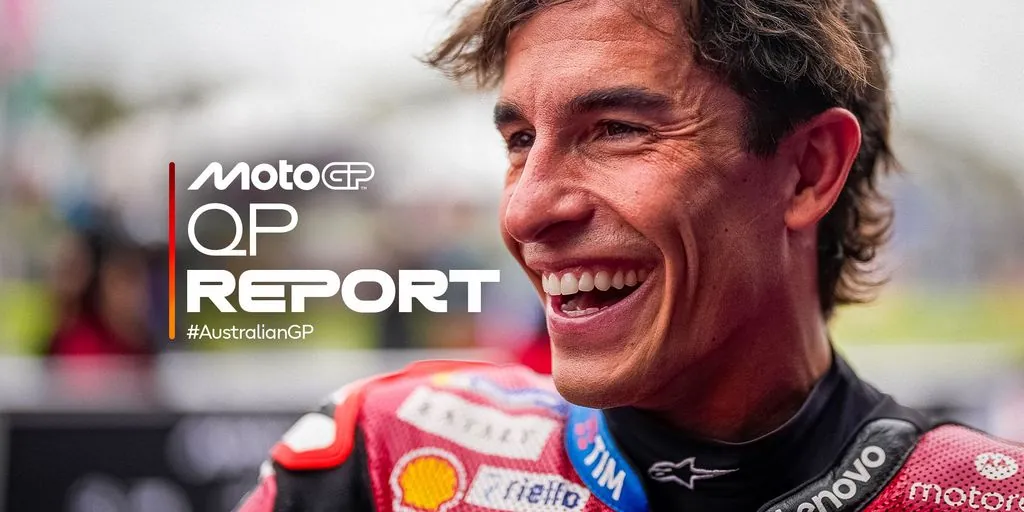
A motorcycle racer smiles while wearing racing leathers.

How Weather Windows Skew Gap Metrics

A massive margin on a qualifying timesheet often tempts observers to view lap times as a direct measurement of rider supremacy, but changing atmospheric conditions heavily distort comparative data. During qualifying for the 2026 Australian Grand Prix at Phillip Island, the official timing screens showed a pole lap of 1:34.203 establishing a 1.494-second cushion over second place. Rather than indicating an isolated performance gap between machines, that statistical anomaly developed because rain returned intermittently over a damp surface, meaning riders did not complete their best efforts in identical track environments.

Timing Windows Versus Pure Raw Pace

When reporting noted that Marc Marquez Recovers from Turn 4 Crash to Take Australian GP Pole, the sequence of session events explained why the gap expanded so dramatically. After tucking the front on his opening lap at Turn 4, Marquez had to switch to his spare Ducati while rivals like Johann Zarco and Jack Miller navigated intermediate lulls in grip. Because asphalt moisture levels shifted from minute to minute, comparing Marquez's decisive late lap against competitor times set under different degrees of rainfall does not provide an apples-to-apples evaluation of bike or rider performance.

Evaluating motorsport timing data accurately requires distinguishing between stable baseline pace and weather-induced outliers. A gap of nearly 1.5 seconds was the widest in MotoGP qualifying since the 2019 Czech Grand Prix, but tracking sector splits alongside changing weather windows demonstrates that the timing delta reflected fluctuating track conditions as much as execution on the bike.

Official reference: Crash to pole: Marc Marquez delivers Q2 showstopper at Phillip Island.