Friday, 23 October 2026

What Split-Specification Practice Data Actually Tells Us

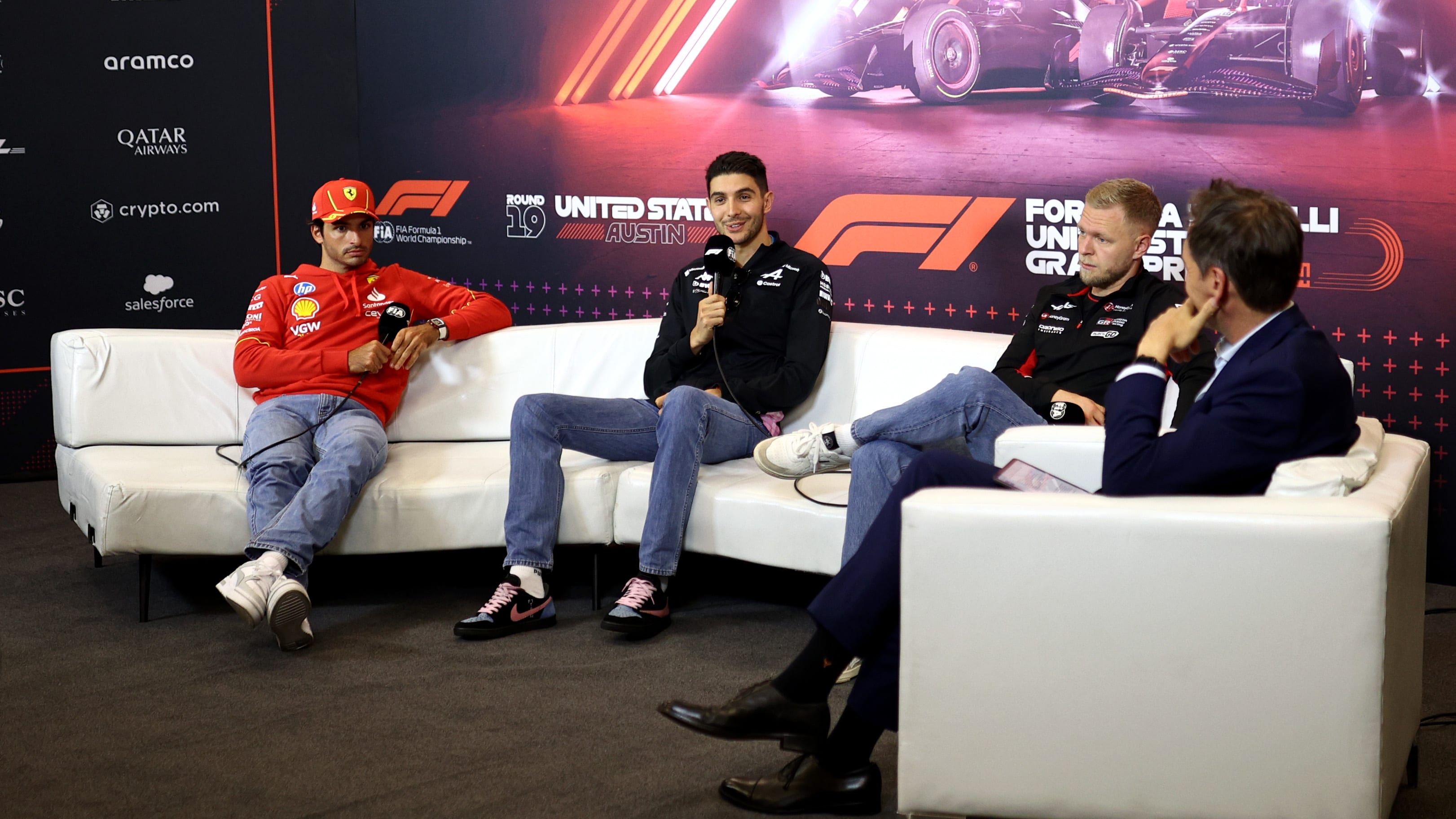
Drivers seated on white sofas with microphones face an interviewer against a United States Grand Prix backdrop.

The Purpose and Limits of Split-Specification Running

Evaluating technical developments during a Grand Prix weekend requires teams to isolate changes under shifting track conditions. During Friday practice at the 2026 United States GP: Audi evaluated a smaller aerodynamic and mechanical package by running the new parts on one chassis while retaining the baseline specification on the other. This parallel test provides immediate comparative telemetry, allowing engineers to verify whether on-track flow structures and balance characteristics align with simulation models across corresponding runs.

However, telemetry and lap times gathered across separate cars cannot be treated as a controlled, laboratory baseline. Fuel loads, individual engine modes, run plans, and driver inputs introduce variables that prevent a direct, like-for-like measurement. Track evolution between runs also continuously alters grip levels, meaning that split-car practice assessments establish directional confidence rather than an absolute figure for lap-time improvement.

Directional Signals Versus Definite Performance Gaps

Public assessments following practice comparisons often confirm operational decisions rather than quantified performance metrics. Following the opening session in Austin, Audi racing director Allan McNish reported that data and lap times supported rolling out the new parts to both cars for second practice, though the team did not release specific figures or outline the individual package components. When a team opts to convert both cars to an updated specification, it signals that the telemetry correlated well enough with factory expectations to justify the setup workload, not that a definitive gap to rivals has closed.

Broader performance context also dictates how practice findings are interpreted over a season. Early-year assessments in Miami had pointed to baseline power unit deficits and infrastructure rebuilding as longer-term hurdles for the project, areas that a modest late-season package in Austin does not directly address. For race data analysts, early weekend split tests are best viewed as verification steps within a development roadmap rather than conclusive proof of altered competitive hierarchy.

Official reference: FIA's Friday press conference on 23 October.

What Remote Officiating Data Actually Proves in Race Control

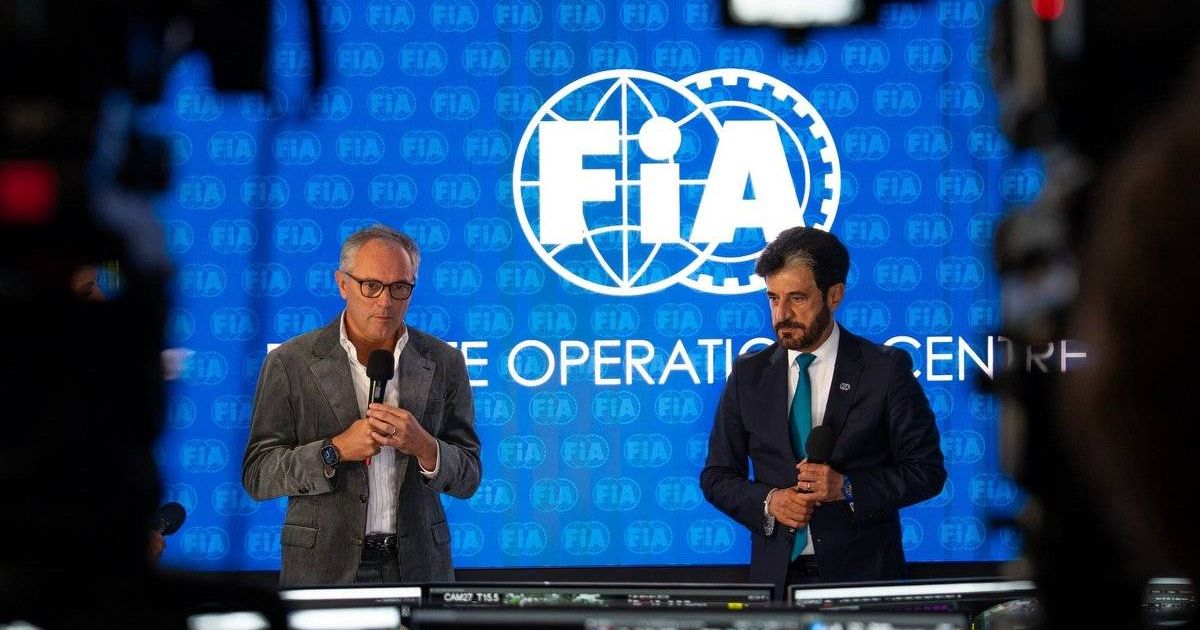
Two men holding microphones before a blue FIA-branded backdrop, with monitors in the foreground.

Information Gathering Versus Sporting Decisions

When the FIA opens new Biggin Hill Remote Operations Centre facilities, the expansion primarily scales the data pipeline available during race weekends. Having up to 16 remote analysts processing over 140 video and audio streams, car-positioning telemetry, and team radio feeds increases the rate at which anomalies can be detected across Formula 1, F2, and F3 sessions. However, readers analyzing regulatory data should distinguish between high-volume detection and final sporting rulings.

The source data demonstrates an expanded capacity to flag potential infractions, such as track limits breaches, false starts, and pit lane infringements. Computer vision and automated audio filtering act as screening mechanisms rather than automated verdicts. While technology flags an anomaly for examination, the determination of intent, context, and penalty severity remains strictly in human hands under trackside officials and stewards.

Evaluating Claims of Improved Consistency

Operational announcements often cite faster and more consistent officiating as a primary objective of centralized telemetry and video monitoring. From an analytical perspective, it is critical not to treat an operational capability as measured performance. The available information outlines infrastructure upgrades and staffing capacity, but it provides no comparative metric or historical dataset tracking average investigation times or penalty variance.

Because baseline measurements of decision accuracy before and after the 2026 Dutch Grand Prix transition are not provided, data observers should view consistency as an intended organizational target rather than an empirically proven outcome. Telemetry and multiple camera angles provide richer context, but the final outputs still rely on human interpretation of the sporting regulations.

Official reference: FIA's announcement.

Evaluating Age Records in Early Grand Prix Racing

Black-and-white photograph of an open-wheel number 8 racing car on a cobbled corner, with spectators behind hay bales.

Context behind the oldest race winner records

Historical statistics often highlight Luigi Fagioli as Formula 1's oldest race winner, having secured victory at 53 years and 22 days during the 1951 French Grand Prix. When examining the Top 5 oldest F1 race winners, which also includes Giuseppe Farina at 46, Juan Manuel Fangio at 46, Piero Taruffi at 45, and Jack Brabham at 43, analysts must look beyond raw chronological numbers to understand how these results were achieved. Rather than demonstrating an era-independent baseline for athletic longevity, the data reflects specific competitive circumstances and era-bound sporting regulations.

Distinguishing shared drives from solo distance victories

The headline metric of Fagioli's win carries a fundamental qualification: he took credit for a shared drive. At Reims-Gueux, Fagioli completed only the initial 20 laps before handing the car over to Juan Manuel Fangio, who drove the remaining distance to the chequered flag. Recording this as an outright win at age 53 demonstrates why statistical attribution alone cannot be treated as evidence of a full race distance completed at peak competitive pace.

Circumstantial factors across early championship eras

Even when drivers achieved solo victories late in their careers, the results often hinged on race-specific attrition and field dynamics. Piero Taruffi took his sole championship victory at the 1952 Swiss Grand Prix aged 45, benefiting after pole-sitter Farina suffered magneto trouble while Alberto Ascari was absent racing at Indianapolis. Conversely, Fangio's 1957 victory at the Nürburgring required passing both Ferraris following a pit stop, while Brabham's 1970 South African Grand Prix win required recovering through the field to pass Jackie Stewart. Four of the five oldest winning drives occurred during the 1950s, highlighting how early world championship participation differed markedly from later decades before modern driver development pipelines and technical formats shifted the competitive landscape.

Official reference: Formula 1’s historical feature.

Interpreting Formula 1 Age Records Without Overstating What They Prove

Three-panel collage: a driver in blue raises an arm; a black-and-white portrait shows a driver wearing goggles and a wreath; another shows a driver holding a large trophy.

How Age Metrics Are Filtered

Ranking lists that catalog driver ages require careful definition before drawing conclusions about athletic longevity. In official historical tallies, the metric tracks a driver at the specific date their final title was secured rather than recording every individual championship campaign across a career. Juan Manuel Fangio, Giuseppe Farina, and Jack Brabham all captured titles in their 40s, while Graham Hill and Nigel Mansell reached the summit at age 39.

Evaluating the Top 5 oldest F1 world champions highlights how strict data parameters shape historical comparisons. For drivers who earned multiple crowns, including only their concluding success prevents repeat appearances from crowding the ranking, which is why Fangio appears solely for his 1957 triumph at 46 years and 41 days despite winning all five of his titles while in his 40s.

Contextual Limits of Age Records

A ranking based on driver age at the moment of championship victory does not measure isolated physical capability across different decades. The record simply reflects when specific individuals mathematically clinched their titles, ranging from Farina in the inaugural 1950 season to Mansell in 1992. Differences in era-specific machinery, calendar lengths, and career entry points mean these numbers capture historical milestone markers rather than uniform athletic baselines.

Official reference: Formula 1’s historical ranking.

Thursday, 22 October 2026

Interpreting Knockout Sim Racing Results Beyond Peak Lap Records

Moritz Löhner with folded arms above a turquoise-and-white GT car, with Dörr Esports and ADAC Esports champion branding.

Peak Pace Versus Format Constraints

In timed motorsport competitions, a driver who sets an event course record is often assumed to hold an outright pace advantage. Data from the inaugural FIA Esports European Hill Climb Cup final in Luxembourg on 11 October 2026 illustrates why that assumption can be incomplete. While Sami Joe Abi Nakhle recorded the fastest virtual ascent along the 5.5-kilometer Glasbachrennen layout during the semi-finals, Moritz Löhner claimed the championship title.

A closer examination of the event structure explains how these metrics diverge. The competition used a best-of-three run format for the quarter-finals and semi-finals, but switched to a single-run decider for the championship match. In that decisive heat, Löhner beats Abi Nakhle after the latter collected two five-second barrier-contact penalties, adding ten penalty seconds to his run time. Because the governing body's summary did not publish the final elapsed times or absolute gap, the data does not quantify raw delta margins between the drivers, showing instead how format rules and penalty sensitivity directly determined the final classification.

Contextualizing Participation and Venue Data

Evaluating entry numbers also requires separating qualifying sample sizes from live tournament metrics. The FIA reported over 7,000 classified participants across 87 countries, yet this statistic reflects the broad online time-trial phase hosted on RaceRoom between 20 August and 7 September 2026, rather than the final event itself. Only the fastest eight qualifiers advanced to the offline decider at the E-Motion sim-racing centre.

Furthermore, competitors faced specific preparation limits. The virtual Glasbachrennen hill climb course, driven in the BMW 134 Judd V8, was disclosed to finalists only on the Saturday morning preceding the Sunday knockouts. As a result, the competition logs capture rapid adaptation to an unfamiliar technical layout under strict contact penalties rather than settled long-term mastery of the machinery.

Official reference: FIA’s event report.

Why Qualifying Trim and Weight Reductions Fail to Predict Sunday Race Pace

The Formula 1 press conference room at Circuit of the Americas during the 2017 United States Grand Prix.

The Gap Between Single-Lap Output and Race Potential

Single-lap qualifying results often prompt premature conclusions about a Formula 1 team's overall competitive baseline. When Williams introduced a lighter chassis during the 2026 season, Carlos Sainz reached the second qualifying segment across three consecutive race weekends starting in Baku. On surface evaluation, repeated Q2 appearances look like measurable progress toward the midfield points bracket, but treating Saturday timing screens as direct indicators of Sunday scoring potential overlooks the mechanical differences between one-lap performance and stint-length pace.

A lighter chassis lowers baseline mass and directly aids acceleration and direction change over a single lap, yet sustained Grand Prix running introduces degradation and thermal loads that clean-air qualifying runs do not expose. In October 2026, Sainz tempers Austin expectations by pointing out that even with improved qualifying potential requiring an exceptional Q1 lap, normal race trim still placed the car around 14th or 15th position, leaving points finishes reliant on mistakes from rival entries.

Separating Track Characteristics from Complete Package Gains

Evaluating vehicle performance metrics also requires isolating specific track traits from genuine multi-circuit upgrades. Circuit layouts like the Circuit of The Americas mix fast changes of direction with tight technical sections, which exposes asymmetric balance issues. When a car demonstrates strength in high-speed complexes, attributing that speed to an overall developmental leap risks conflating track-specific aerodynamic efficiency with broader race competitiveness.

Similarly, driver adaptation data can easily be misread by outside observers. Progress in adjusting driving technique to suit an unfamiliar handling trait helps a driver extract closer to the machinery's ceiling, but it does not alter the physical baseline of the car. When assessing telemetry and timing sheets across practice and qualifying, analysts must distinguish between an operational baseline shifting forward and the temporary performance spikes produced by track layout alignment, low-fuel runs, or rivals running sub-optimal engine modes.

Official reference: FIA's United States Grand Prix Thursday press conference.

How to Read Cross-Country Baja Entry Data Without Misleading Conclusions

Nasser Saleh Al-Attiyah’s white rally SUV crosses sandy desert terrain dotted with shrubs during the 2011 Qatar International Baja.

Entry lists versus starting grids

Motorsport entry figures published before a rally raid represent intended participation rather than confirmed starters. Pre-event documentation like the preview for the Qatar International Baja: 37-car field provides an initial breakdown across vehicle categories, but administrative checks and scrutineering must occur before any vehicle officially starts the competition. Looking at overall numbers without distinguishing between registered contenders and local entries can distort the true competitive picture.

Understanding split registrations and point eligibility

A headline entry tally rarely means every vehicle is competing against each other for championship honours. In dual-sanctioned events featuring both the FIA World Baja Cup and regional cups, entry lists are partitioned into smaller sub-registrations alongside competitors who may score points in neither series. In the 2026 Qatar event preview, only 11 crews registered for World Cup points and 15 for Middle East Cup points out of the 37 announced cars. In specific categories such as SSV, an entry list might contain 13 vehicles, yet feature only one driver scoring points toward the World Cup, meaning category depth cannot be judged solely by car counts.

Interpreting absences and points tables

Points tables in cross-country rallying also reflect calendar constraints rather than direct head-to-head performance across an entire season. Drivers may sit out an event after completing their nominated scoring rounds, as seen with World Cup leader Dania Akeel entering the penultimate 2026 round holding an eight-point margin over Mitchel van den Brink without competing in Lusail. Comparing total point margins across contenders who have contested different numbers of events can lead to faulty conclusions if the underlying scoring rules and missed rounds are ignored.

Official reference: FIA’s 2026 Qatar preview.